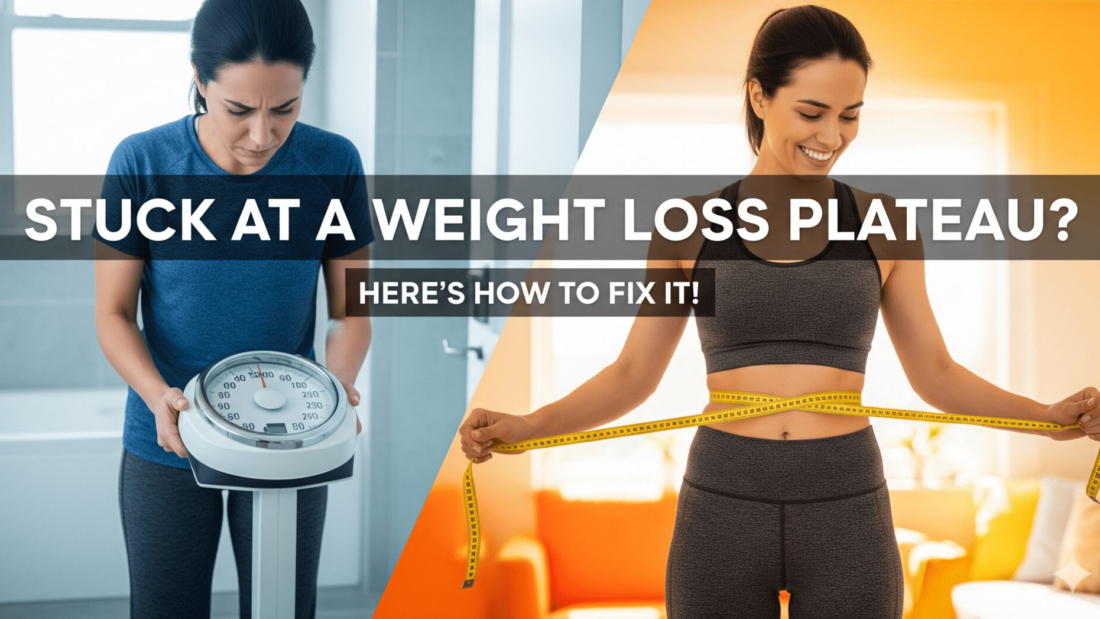
1. What Exactly Is a Weight Loss Plateau?
Ever feel like your body is gaslighting you? You’re doing the work—eating the chicken and broccoli, logging the miles on the treadmill—and for what? A number on the scale that hasn’t moved in a month.
First off, don’t you dare think this is your fault. You didn’t lack willpower. You didn’t “break” your metabolism. When you’re doing everything right but the scale won’t move, you’ve hit a weight loss plateau. It’s exhausting.
Your body hates change. It loves comfort. When you first started cutting calories, it was a five-alarm fire. It panicked and burned fat for fuel.
But now? It’s gotten used to the new routine. It’s adapted. It’s learned to do the same amount of work on fewer calories. As the folks at Harvard Health put it, a smaller body simply needs less energy to exist. You burn fewer calories at rest than you did when you were heavier. It’s basic math, not a moral failing.
So the stall isn’t a sign to quit. It’s a sign to get smarter. Your old plan got you here. Your new plan—the one we’re about to build—will get you moving again.
Harvard Health explains that as you drop pounds, your metabolism slows, and you burn fewer calories—even at rest. Harvard Health+1
Mayo Clinic adds that your body also sheds water and muscle in early weight loss, further reducing calorie burn and stalling progress. Mayo Clinic
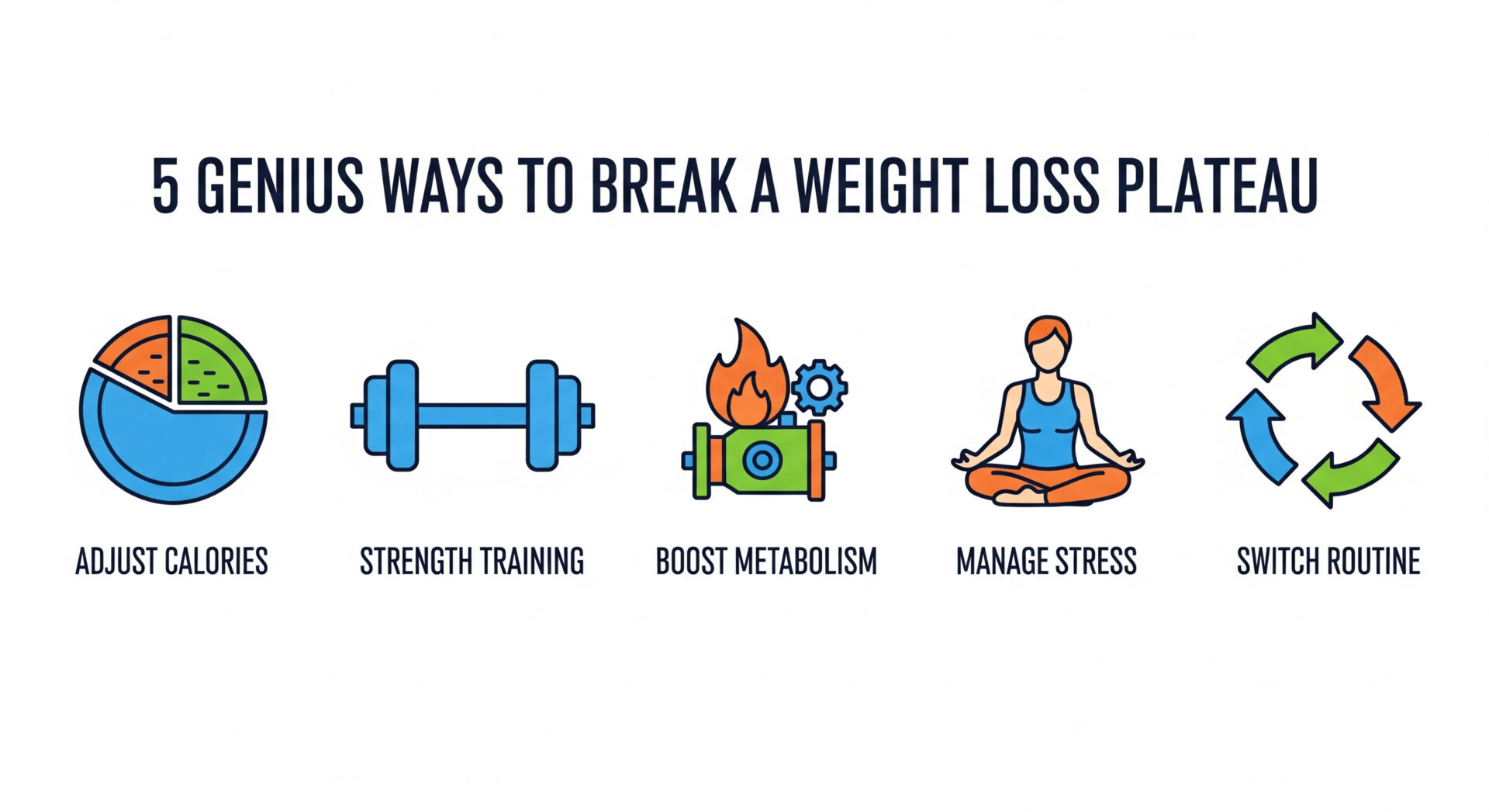
2. 5 Genius Ways to Break a Weight Loss Plateau
Let’s get you unstuck with these expert-approved tweaks:
2.1 Adjust Your Calories Smartly
When you’re stuck at a weight loss plateau, your body adapts. Mayo Clinic advises cutting additional calories or, better yet, increasing activity to restart the drop. Mayo Clinic
2.2 Rev Up Activity & Strength Training
More movement helps. Harvard’s “Exercise Paradox” suggests our bodies adapt to high activity, but strength training still helps keep metabolism humming and preserves muscle. WikipediaHarvard Health
2.3 Mind Your Metabolic Slowdown
Harvard notes that metabolism slows after weight loss—just like an engine idles more efficiently. Boost protein intake, do HIIT or weight training to give it a nudge. Harvard Health+1
2.4 Balance Hormones & Manage Stress
Here’s the truth nobody tells you about weight loss plateaus: sometimes it’s not about your diet at all. It’s about your hormones working against you.
When you’ve been in a calorie deficit for a while, two key hormones work against you:
- Leptin (your “I’m full” hormone) decreases
- Ghrelin (your “I’m hungry” hormone) increases
This means you feel hungrier while feeling less satisfied by food – a brutal combination that makes maintaining a deficit feel impossible.
But there’s another hormonal culprit: cortisol. When you’re stressed – whether from work, life, or even the stress of dieting itself – your body produces more cortisol. This stress hormone literally tells your body to:
- Store more belly fat
- Crave high-calorie junk food
- Hold onto stubborn weight
The research is clear – studies show cortisol can increase abdominal fat storage independent of calories consumed. So if you’re doing everything “right” but not seeing results, look to your stress levels and sleep quality before cutting more calories. NCBIEatingWell
7 Genius Steps: Natural Ways to Get Lean Without Fancy Gym Gear
2.5 Switch Up Your Routine
Your body hates sameness. Mix up your meals, carb timing, and workouts. New — but sustainable — habits avoid metabolic adaptation. Also, diets within circadian-aligned time frames (like earlier eating) support metabolism. Harvard HealthHarvard Public Health
3. People Also Ask
Seriously—Why Is My Low-Carb Diet Not Working Anymore?
Look, I’ve been there myself, facing a weight loss plateau. You cut out the bread, potatoes, and sugar. You’re eating all the “right” low-carb foods. For weeks, the weight dropped steadily. Then… nothing. The scale won’t budge. You’re following the same plan but getting zero results.
Here’s what’s really happening in your body:
It’s not that low-carb doesn’t work – it’s that your body has adapted. Those initial great results came from water weight loss and your body responding to the novelty of your new eating pattern. But now your metabolism has adjusted.
Even on low-carb, calories still matter. Those “allowed” foods – cheese, nuts, fatty meats, cream – are incredibly calorie-dense. It’s surprisingly easy to overeat them without realizing it.
But there’s more to it than just calories. After weeks of dieting, your:
- Metabolism has slowed to match your new intake
- Hunger hormones are working against you
- Stress hormones may be elevated
- The body has become efficient at using the food you give it
The solution isn’t to restrict more severely. That will just make the problem worse. Instead, you need to strategically vary your approach – sometimes eating more, sometimes less – to keep your body guessing.
How to fix a weight loss plateau on keto?
Try timing carb reloads, increasing protein, or adding structured exercise. Even under keto, metabolic adaptation can kick in—so mix things up!
If You’re Over 40 and Can’t Lose Weight, Read This.
Remember when you could just skip dessert for a week and lose five pounds? Those days are gone. It’s not you—it’s biology. Around this age, your metabolism isn’t just slowing down—it’s actively working against you thanks to hormonal shifts, muscle loss, and years of your body adapting to your old tricks.
Forget everything you thought you knew about weight loss. Here’s your new playbook:
- You gotta lift. Not cute little pink dumbbells. Real weight. Strength training isn’t optional anymore. It’s the single most effective way to fight back against muscle loss and fire up a sluggish metabolism. Muscle is metabolic currency. The more you have, the more you can eat.
- Protein is your new best friend. I’m not talking about a single grilled chicken breast at dinner. You need a serious source of protein with every. single. meal. It keeps you full, builds and holds onto that precious muscle, and your body burns more calories just digesting it.
4. FAQ (FAQ Schema)
- Q: Why has my weight loss completely stopped dead in its tracks?
A: Listen, your body isn’t trying to frustrate you – it’s trying to survive. When you first started your diet, it was a shock to your system. But now? Your metabolism has adapted. It’s learned to run on fewer calories. You’ve likely lost some metabolically active muscle tissue. Your hunger hormones have shifted to conserve energy. Your body has essentially figured out your game and decided to maintain the status quo. This isn’t a failure – it’s biology. - Q: How long will this damn plateau last?
A: As long as you keep doing the same damn thing. Seriously. If you don’t change something—your calories, your workout intensity, your recovery—your body has no reason to start losing again. The plateau isn’t a timer; it’s a standoff. You change first, then your body will follow. - Q: Can healthy habits still improve my health even without weight loss?
A: Yes—Harvard researchers found that even individuals who didn’t lose weight saw better cholesterol, leptin levels, and less visceral fat. Harvard Public Health
5. The Smoothie Diet
When it feels like nothing’s shifting, a little turbo boost helps. Enter The Smoothie Diet—a 21-Day Rapid Weight Loss & Health Transformation plan. Packed with nutrient-rich smoothies that support your nutrition, ease hunger, and deliver vitamins your body craves. Ease into smarter eating habits and real results. Want to give it a try? Check out The Smoothie Diet and see if it’s your game-changer.
The Smoothie Diet: 21-Day Rapid Weight Loss & Health Transformation
Leave A Comment