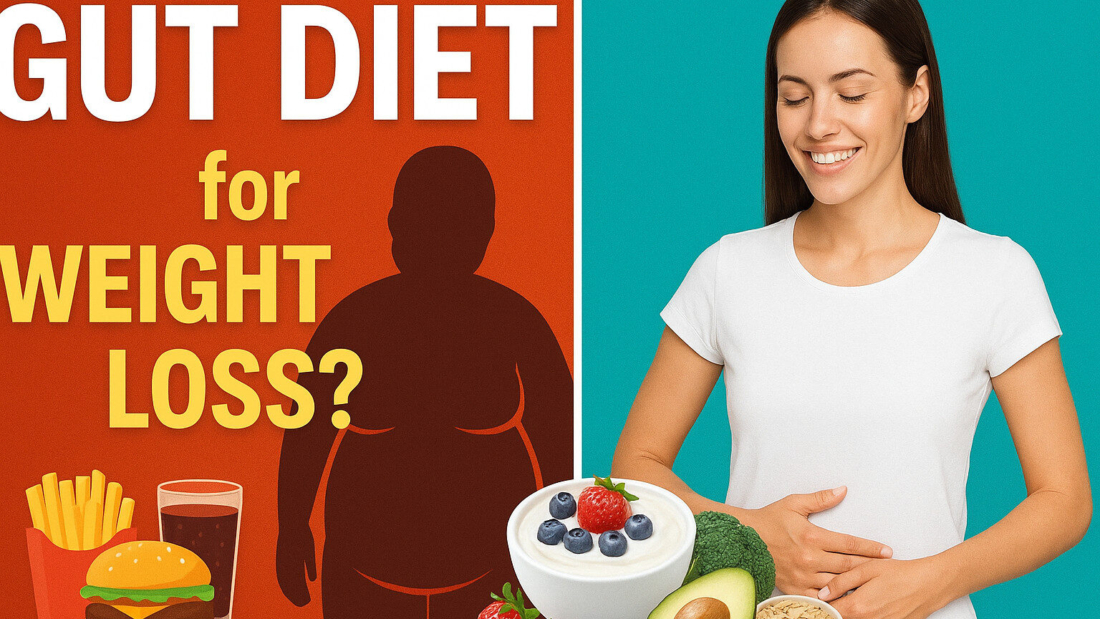
1. Why the “Gut Diet for Weight Loss” Is a Game-Changer
Ever feel like traditional “eat less, move more” advice just isn’t cutting it anymore? Enter the gut diet for weight loss — focusing on feeding your gut microbiome to support metabolism, satiety, and weight regulation.
Harvard Health notes that a Western diet—high in sugar, fats, and processed foods—“creates a toxic environment for healthy microbes” in your gut, while fiber-rich prebiotic foods help beneficial bacteria thrive and produce short-chain fatty acids that support metabolism. Harvard Health
Here’s what most people miss: your gut bacteria are literally calling the shots on your metabolism. This isn’t some alternative health theory—it’s what the latest science is proving.
A major 2023 research review made it crystal clear: the microscopic world in your gut directly determines how your body balances energy. This changes everything about how we approach weight management. Forget just eating less—the real opportunity is in feeding the right gut bacteria. PubMed
Let me put it this way: when your gut microbiome is healthy, everything works better. Your hunger signals stay balanced. Your body processes food more efficiently. You stop fighting your own biology.
2. 5 Essential Gut-Friendly Principles for Weight Loss
Here are five evidence-backed, doctor-approved tweaks you can adopt right away. These are not gimmicks—they’re rational, sustainable strategies rooted in research.
2.1 Fiber-First Foods That Feed Good Bacteria
Fiber isn’t just filler—it’s fuel for gut bacteria. A new EatingWell study revealed that each gram of fiber added daily reduced metabolic syndrome risk by 9%. EatingWell
What to prioritize:
- Beans and lentils – Not just for protein. These are powerhouse prebiotics that specifically feed the bacteria that help regulate your metabolism.
- Whole oats and bran – This isn’t about breakfast – it’s about feeding your gut microbes the specific fibers they need to produce compounds that help control appetite.
- Onions, garlic, and artichokes – These aren’t just flavor – they’re medicine for your gut. They contain compounds that specifically nourish beneficial bacteria.
- Slightly green bananas – The resistant starch in under-ripe bananas is gold for your gut microbes. It’s their preferred fuel source.
- Broccoli and Brussels sprouts – Yeah, they make you gassy. That’s the point – it means they’re working. That gas is a byproduct of your gut bacteria feasting on the good stuff.
Avocado? Yes, please. Over a 12-week trial, one daily Hass avocado boosted microbial diversity without weight gain. Verywell Health
2.2 Probiotics for Weight Loss — Which Ones, and Do They Work?
Probiotics have a mixed rep, so let’s get real. Some strains—like Lactobacillus gasseri—have shown modest belly fat reduction. Second Nature, but supplements like LeanBiome bring a nine-strain combo—there’s no independent study proving the whole formula works. Second Nature
Here’s the real secret no one tells you:
- Loading up on yogurt, kefir, and kimchi is only half the battle.
- You can eat all the probiotics in the world, but without enough fiber?
- You’re basically sending your good gut bacteria to a banquet with no food.
2.3 Minimize Gut Saboteurs: Ultra-Processed Foods & Added Sugar
A 2024 study in Obesity Science & Practice found cutting ultra-processed food by half led to nearly an 8-lb weight drop in just eight weeks—thanks to improved hunger cues and metabolism. Verywell Health
To give your gut a break:
- Sugary drinks – These are liquid inflammation that feed the worst bacteria in your gut
- Ultra-processed snacks – If it comes in plastic with 20 ingredients you can’t pronounce, it’s not food – it’s a chemical experiment
2.4 Balanced Plate: Polyphenols, Healthy Fats & Diversity
Harvard’s research on diet and microbiome links unprocessed, plant-based foods with a healthy microbiome. Fish, eggs, nuts, seeds, and polyphenols support lower disease risk and microbiome diversity. Harvard Health
Add a diversity of color: berries, leafy greens, olives, fatty fish, fermented items—wide variety = a wider range of gut allies.
2.5 Take a Plan-Based Approach — Meal Structure & Consistency
Mindless eating is a gut enemy. Structure your meals — consistent timing, balanced macros, fermented snacks, hydration, stress-check-ins. The Harvard Chan study reminds us that metabolic improvements happen even without weight loss—when people follow healthy diets faithfully. Harvard Chan School
Here’s what a day of actually feeding your gut looks like (no BS):
- Breakfast: Don’t just eat oatmeal – make it work for you. Stir in a big spoonful of plain yogurt and throw on some berries. You’re getting fiber + live cultures + prebiotics all in one bowl. It’s not breakfast – it’s gut fuel.
- Lunch/Dinner: Look at your plate. Where are the plants? Where’s the fermentation? Throw a handful of chickpeas on that salad. Add kimchi as a side to your chicken. Drizzle olive oil everywhere. You’re not just eating – you’re building a microbiome.
- Snacks: This is where most people mess up. An apple isn’t just an apple – it’s food for your gut bugs. A handful of almonds isn’t just a snack – it’s diversity for your microbial community. And if you really want to level up? Keep sauerkraut in your fridge and eat a forkful between meals. Your gut will thank you.
Bloated? Gut Issues? The Real Reasons Your Digestion Is Failing in 2025 (And 5 Fixes)
3. People Also Ask
How does gut health affect weight loss?
Your gut bacteria aren’t just passive inhabitants – they’re the actual managers of your metabolism. These microscopic organisms control:
- Where your body stores fat
- How intense your hunger signals become
- Whether you crave salad or sugar
- How efficiently you burn energy
When your gut ecosystem gets disrupted, your body panics. It starts storing fat like we’re facing a famine. It turns up your hunger signals to maximum volume. It makes you crave quick energy in the form of sugar and junk food.
But when you fix your gut? Everything changes. Your metabolism actually starts working with you instead of against you. The constant hunger disappears. The cravings fade. Your body naturally finds its healthy weight.
This isn’t some alternative theory – it’s proven science. Research from Harvard Health confirms that your gut microbiome directly controls your metabolic function, appetite signals, and fat storage patterns.
The real problem isn’t your willpower – it’s your biology. And the solution isn’t another restrictive diet – it’s healing your gut from the inside out. SciTechDailyHarvard Health
What is the gut diet for weight loss?
It’s not another restrictive diet. It’s about eating to feed your gut bacteria what they actually need: loads of fiber from plants, fermented foods like yogurt and kimchi, and a huge variety of fruits and vegetables. The goal isn’t counting calories – it’s creating a gut environment where weight management becomes natural.
Probiotics weight loss: do they work?
Some specific strains might help a little, but they’re not a magic solution. The benefits usually disappear when you stop taking them. You’ll get much better, lasting results from actually eating fermented foods combined with plenty of fiber – that’s what creates a truly healthy gut ecosystem that supports weight management long-term. (Second Nature) Second Nature
4. FAQs
Q: What are the worst foods for gut health?
You know those processed snacks that stay “fresh” for months? Yeah, those. They’re gut killers. I’m talking chips, crackers, sugary cereals – anything that comes in flashy packaging. This stuff doesn’t just sit in your stomach – it wipes out your good gut bacteria and feeds the bad stuff that makes you gain weight and feel hungry all the time.
Q: What foods actually heal your gut microbiome?
Stop looking for magic bullets. Your gut wants the same boring foods that have always worked:
- Beans and oats – not sexy, but they’re what your good bacteria actually eat
- Yogurt and kimchi – the fermented stuff that adds new soldiers to your gut army
- Avocados and nuts – they calm down gut inflammation
- Berries – they’re like premium fuel for your microbiome
This isn’t about some fancy diet – it’s about eating like a normal human instead of a garbage disposal.
Q: How long does it take to improve gut health for weight loss?
Studies suggest early changes in microbial markers can happen within weeks. You’ll feel less bloated in a few weeks if you stick with it. But real change? That takes 3-6 months of not quitting. Your gut didn’t get destroyed in a week, and it won’t fix itself in a week. Stop looking for quick fixes and just consistently eat real food. The results will come when you stop giving up after two weeks.
5. Affiliate Spotlight: LeanBiome — Support for Gut Health & Weight Loss
Look, I get it – eating perfectly 24/7 is tough. Even when you’re loading up on fermented foods and fiber, sometimes your gut needs extra firepower. That’s where a targeted supplement like LeanBiome comes in.
This isn’t some magic pill – it’s a strategic blend of proven probiotic strains that research shows can help:
- Support healthy metabolism
- Improve digestion
- Balance gut bacteria
But here’s the real talk: No supplement replaces real food. This works alongside your healthy diet, not instead of it.
If you’ve been eating clean but still struggling with bloating, cravings, or stubborn weight…
This might be that extra boost you need.
Ready to see if it’s right for you?
Click here to check out LeanBiome now.
LeanBiome – Naturally Lean Gut Support for Healthy Weight Loss
Leave A Comment