

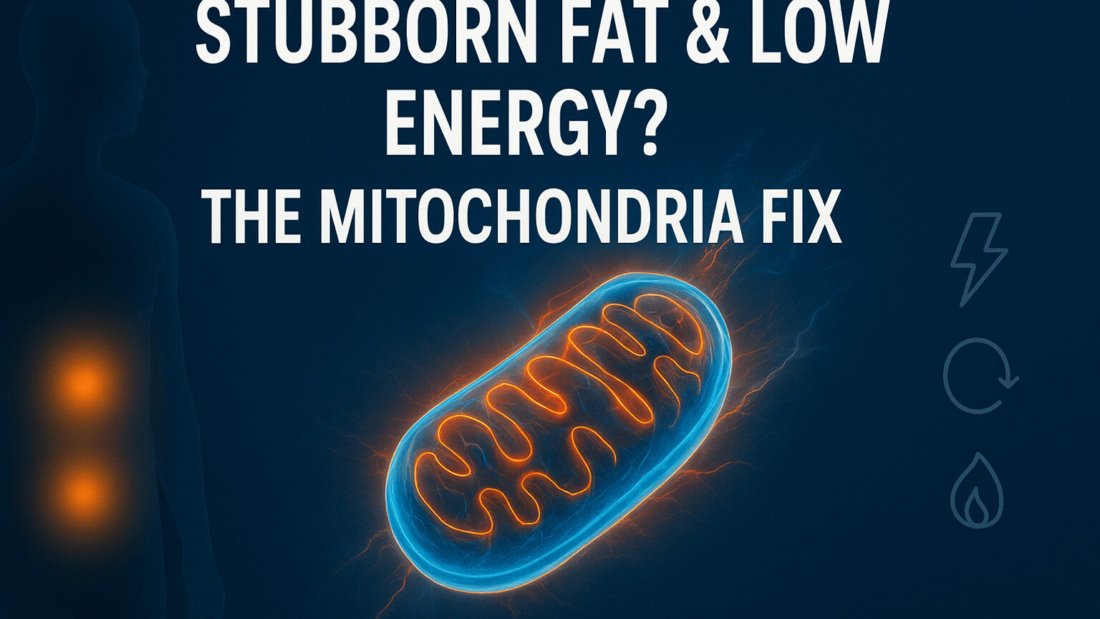
Stubborn Fat & Low Energy? 5 Genius Secrets to Fix Mitochondria
Why your “eat-less, move-more” might be failing: mitochondria under the hood
You know mitochondria — the tiny “powerhouses” in each of your cells. Their job: generate energy. But they also play a major role in how our body handles fat. When they’re functioning well, they help burn fat efficiently, support energy (hello — no more dragging afternoons), and keep metabolism humming.
But lifecycle, poor diet, inflammation, overfeeding, and chronic stress — all can mess with mitochondrial health. That’s when your body starts holding onto fat stubbornly, energy drops, and fat-burning feels like an uphill battle.
What science says about mitochondrial dysfunction and metabolic problems
In the past couple of years, research has started shining a light on mitochondria’s role in obesity and metabolic health — and the findings are eye-opening.
Think of your fat cells as having tiny batteries. Recent research shows that obesity can short-circuit these batteries. The mitochondria—the energy burners—get fragmented and can’t hold a charge, leading to a cellular power outage. When this happens, your body’s ability to torch fat for fuel plummets, creating a perfect storm for low energy causes and weight retention. National Institutes of Health (NIH)+2ScienceDaily+2
Another review from 2024 looked at “adipocyte mitochondria” across white, brown, and beige fat tissue. It concluded that when mitochondria in adipocytes (fat cells) malfunction, lipid handling goes haywire, oxidative stress increases — a recipe for systemic metabolic disruption. MDPI+1
There’s also emerging work showing that mitochondrial impairment doesn’t just affect fat tissue but can influence how we process dietary fat in the gut. A 2023 study discovered that dysfunctional mitochondria in intestinal cells led to abnormal accumulation of dietary fat, impairing proper lipid transport. ScienceDaily+1
Finally, and this is critical, metabolic diseases tied to obesity and insulin resistance often coexist with mitochondrial decline. In inflamed or insulin-resistant fat tissue, mitochondria underperform. PubMed+1
Bottom line: it’s not always about calories. Sometimes, it’s about power at the cellular level — or the lack of it.
Every day lifestyle shifts to support your cellular powerhouses
Now I don’t believe in silver-bullet “hack” solutions. But if you want to support your mitochondrial health (and thus target stubborn fat & low energy), there are some real, science-backed habits you can build.
- First, moderate your fat and sugar overload. High-fat diets — especially when combined with overfeeding — have been shown to impair mitochondrial fusion/fission balance. PubMed+1
- Second, your mitochondria are either flexible or they’re broken. To make them flexible, you need two things: real food and periodic fasting. This combination teaches your body to burn its own fat for fuel. It’s the fundamental hack for low energy and the only way to create a true, non-stimulant fat burner inside your own cells.
- Third, stop overlooking this: exercise builds mitochondria. It’s the only signal that tells your body to forge new cellular power plants. More mitochondria means a higher resting metabolism and a fundamental fix for low-energy causes. This is how you engineer a faster metabolism from the inside out.
- Fourth — manage inflammation. Chronic low-grade inflammation in fat tissue messes with mitochondrial metabolism. Immune-cell infiltration of fat tissue can suppress key mitochondrial pathways. OUP Academic+1
Do all these consistently, and you might just reboot your body’s metabolic engine.
Supplements & non-stimulant options: a realistic mitochondrial boost
Let’s be upfront: supplements aren’t magic. But when used right, they can support your mitochondria — especially if lifestyle alone isn’t cutting it.
Because mitochondrial dysfunction underlies many metabolic issues, researchers view mitochondria as valid “therapeutic targets” for obesity, insulin resistance, and fat accumulation. PubMed+1
That’s why “non-stimulant fat burner” formulas are rising in popularity. These focus on improving mitochondrial health, rather than just jacking up energy with caffeine. They aim to boost cellular energy production, support fat oxidation, and increase metabolic flexibility.
One such supplement gaining attention is Mitolyn. It’s promoted as a metabolic-health supplement designed specifically to support mitochondrial function — a potential “best supplement for energy and fat loss.” (I’ll get more into this below.)
That said, do your homework. Look for evidence of safety, transparent ingredient sources, and realistic claims. When supplementation is combined with a good diet, smart training, and recovery, that’s where results become real.
5 Genius Secrets: 21 Day Weight Loss—How to Lose up to 25 Pounds Naturally
FAQs — Because you (rightly) ask: “Why am I always tired and can’t lose weight?”
Q: Can poor mitochondrial health really cause stubborn fat and low energy?
Yes — there’s growing evidence. When mitochondria become fragmented or dysfunctional (due to poor diet, inflammation, overfeeding, etc.), fat-burning capacity drops, energy production weakens, and metabolic health suffers. National Institutes of Health (NIH)+2MDPI+2
Q: How can I fix mitochondrial dysfunction naturally?
Reduce nutrient overload (especially excessive fat & sugar), eat nutrient-dense whole foods, stay physically active, manage inflammation (through sleep, stress reduction), and give your body metabolic variety (e.g. mild intermittent fasting or calorie cycling).
Q: What about supplements — do they work?
Some seem promising. Supplements marketed as “non-stimulant fat burners” or “metabolic health supplements” aim to support mitochondria rather than rely on stimulants. When used with a good lifestyle, they may help boost cellular energy and fat oxidation. But they’re not magic bullets.
Q: Are mitochondria the same in all fat tissues?
Nope. White fat, brown fat, and beige fat differ in mitochondrial density and function. Mitochondrial dysfunction in white adipocytes seems especially tied to poor lipid handling and metabolic disease. MDPI+1
Q: Why does high-fat or high-calorie eating sometimes make fat harder to lose?
Because chronic overfeeding (especially with high fat) can trigger mitochondrial fragmentation and dysfunction, undermining the cell’s ability to burn fat, turning metabolic machinery “off.” ScienceDaily+2PubMed+2
Final thoughts & next steps
Look — I’m not telling you that every supplement claiming “mitochondrial support” is worth your time. Far from it. But I am saying this: if stubborn fat and constant tiredness feel like immovable walls — sometimes the problem isn’t calories or willpower, but what’s happening at the cellular level.
Focus on raising your body’s metabolic IQ. Clean up your nutrition. Move with purpose. Sleep well. Calm down inflammation. When appropriate, consider evidence-backed supplements that aim to support mitochondria (non-stimulant fat-burning style).
If you give your body this kind of holistic care, you might just find that fat melts off easier, energy comes back, and you feel like you again.
Try it. And thank me later 😉
Promotional Note
If you’re serious about supporting your mitochondrial health and want a supplement designed for that — check out Mitolyn. It’s marketed as a metabolic health supplement that supports fat loss and boosts cellular energy. Unlike stimulant-heavy fat-burners, Mitolyn focuses on mitochondrial support, which may help you tackle stubborn fat and low energy more sustainably. Learn more about Mitolyn here.
(As always, consult with a healthcare professional before starting any supplement — especially if you have underlying conditions or are on medication.)
Leave A Comment