What’s Causing Your Bloating and Slow Digestion?
Before you try random “hacks,” you must understand what’s really going on behind the scenes.
Digestive slow-down and trapped gas
As we get older or if our gut motility slows, digestion takes longer. That means food and gas linger. Too long. According to experts, a sluggish gut gives more time for gas to accumulate, leading to that heavy, bloated feeling. Harvard Health+1
Also, if you eat too fast or swallow a lot of air (yes — that includes talking while eating, chewing gum, or drinking through straws), that air eventually becomes gas and causes bloating. Harvard Health+1
Fermentable foods, fiber overload & sugar-free traps
Some foods simply ferment more — especially certain carbs, some fibres, artificial sweeteners, or sugar-free snacks. When your gut bacteria ferment these, gas builds up. Many people jump on high-fibre diets or chew sugar-free gum thinking it’s healthy — but that “too much too fast” can backfire. The Times of India+2DXB News Network+2
Hidden gut imbalances: intolerance, overgrowth, etc.
Forget ‘bad foods’ for a minute. The real issue might be a mechanical failure in your digestive pipeline. With SIBO, your small intestine—meant to be relatively clean—becomes a stagnant, over-fermenting swamp. With an intolerance, the assembly line lacks a specific tool to break down a compound, so it just rots in transit. This isn’t discomfort; it’s internal dysfunction. Chronic, debilitating bloating is your body’s alarm for this. Harvard Health+1
5 Genius Moves for Real Bloating Relief (Gut Health Guide)
I’ve grouped the changes that helped me and many clients. These aren’t flash fixes — but if you stick with them, you’ll notice real change.
1. Slow down: chew, eat mindfully, create good habits
When you eat fast, your stomach receives unprocessed baggage it never agreed to carry. Its job is to churn and break down food with acid, but it can’t chew. You’re forcing it to deal with whole bites, pockets of air, and panic. The result is a traffic jam. Digestion slows to a crawl as it tries to handle the mess, and everything ferments and produces gas. Eating mindfully is like pre-packaging that baggage neatly. You do the work your stomach can’t, so it can efficiently transport the contents onward without a backlog. You fix the bloating by fixing the logistical failure at the very first stage.
The core mechanism is physical, not psychological. It’s about pre-digestion and air intake. Forbes+1
2. Rework your diet: avoid common triggers and adjust fibre wisely
A sudden spike in fiber doesn’t feed your gut; it overwhelms it. The result is gridlock, chaos, and the noxious exhaust of a bacterial traffic jam—that’s the gas and bloating. Adding fiber slowly is like adding lanes and upgrading the infrastructure first. It allows for a smooth increase in traffic, so everything keeps moving without the painful backup. The Times of India+1
Also: watch out for carbonation (sodas, sparkling drinks), artificial sweeteners (sorbitol, xylitol, maltitol), sugar-free gum — these are classic bloating triggers. natureetscience.com+1
Here’s a dead giveaway for a dairy issue: if you feel gassy, cramped, or look visibly bloated within a few hours of milk, ice cream, or a creamy sauce—listen to that. Your body might be telling you it can’t break down the lactose. The fix isn’t a medication; it’s a swap. The market is full of great lactose-free cheeses and milks, or alternatives like oat milk, that give you the creaminess without the drama. Harvard Health+1
3. Use “gut-friendly” foods and natural remedies for bloating relief
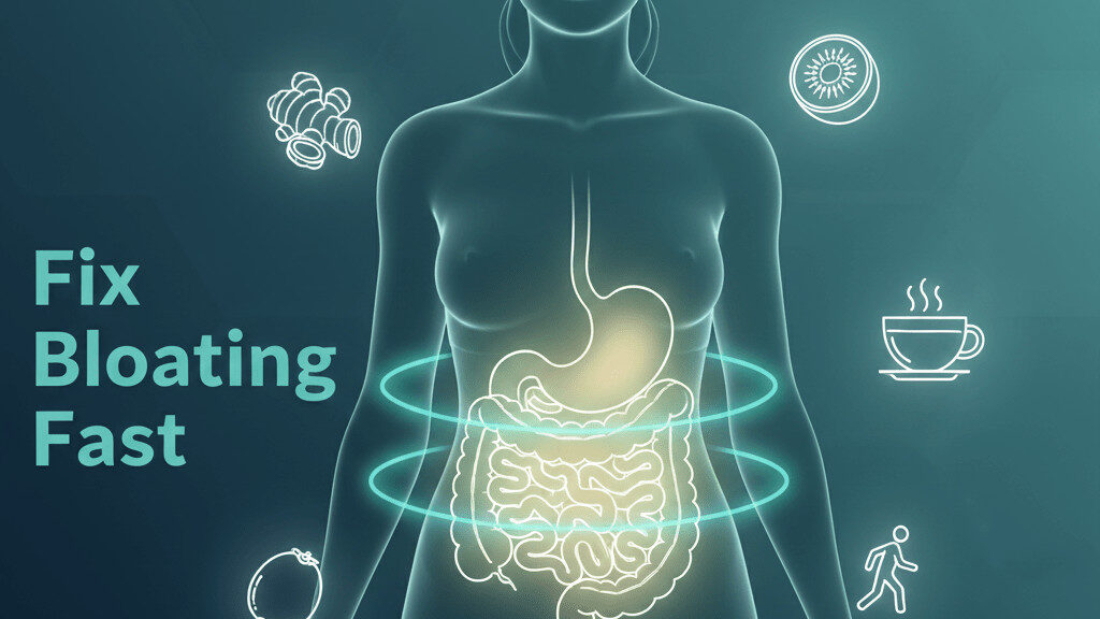
The Papaya and kiwi are like pouring a solvent on that sponge, making it disintegrate faster. The actinidin in kiwi is like adding tiny blades to the mix, shredding it. Eating these fruits isn’t nutrition; it’s sending in a biochemical demolition team to raze the undigested mess so your system can clear the site. The Times of India+1
Herbal teas — peppermint, ginger, chamomile — are also surprisingly effective. Peppermint, for instance, can relax the gut’s muscles and help gas pass, easing discomfort and bloating. The Times of India+1
4. Get moving — even a short walk helps more than you think
Here’s the myth: you only need hardcore workouts for gut health. Not true.
After meals, a gentle 10–15 minute walk helps your gut contract and push food and gas forward. It’s simple — and many people (including me) underestimate how effective it is. The Times of India+1
I started making it a habit: walk after lunch, or after dinner if I’m at home. Most of the time, that was enough to prevent that “bloated all evening” feeling.
Bloated? Gut Issues? The Real Reasons Your Digestion Is Failing in 2025 (And 5 Fixes)
5. Be aware — sometimes it’s not just diet. Consider deeper gut issues.
If you’ve tried all of the above and still feel bloated regularly, or your digestion stays painfully slow — you might be dealing with underlying conditions: SIBO, lactose intolerance, slow gut motility, gastroparesis, or sensitivity to certain carbs (like FODMAPs). Harvard Health+1
It’s not “just in your head.” The gut is complex. Sometimes, you need to slow down, observe carefully, maybe even consult a gastroenterologist.
Why Some “Quick Fixes” Fail (And What’s the Better Way)
Ever tried extreme fibre hacks or probiotic overload? I did. Big mistake. My gut rebelled.
Here’s the thing: a sudden surge in fibre or fermented food can overwhelm the system — especially if your gut flora isn’t ready. That can trigger more gas and bloating. That’s why experts recommend a gradual approach. The Times of India+1
Same with artificial sweeteners or carbonation. Sounds harmless. But once they hit your gut, problems begin.
Bottom line: quick fixes rarely last. Sustainable, gradual habits? That’s where lasting relief lies.
Frequently Asked Questions (FAQ)
Q: Why is my digestion so slow these days?
A: Several factors — slow gut motility due to age or lifestyle, swallowing air from eating fast, or having a gut imbalance (like SIBO, lactose intolerance, or sensitivity to FODMAPs). Also, big heavy meals or sudden changes in fiber intake can slow digestion. Harvard Health+2Harvard Health+2
Q: What are the best foods for gut health and bloating?
A: Foods like papaya, kiwi (digestive enzymes), fermented foods (yogurt, kefir), mild soluble fiber (oats, bananas), and plenty of water. Herbal teas — peppermint, ginger, chamomile — are also great for bloating relief.
If bloating is frequent, persistent, or severe — with additional symptoms (pain, weight loss, blood in stool) — you should see a doctor. Harvard Health+1
A Sample Day for Gut Comfort (How I Eat Now)
This is my protocol to bypass my gut’s weaknesses:
- Warm water on waking forces an initial bowel contraction.
- The 20-minute meal rule is non-negotiable; it’s the minimum time required for neurological digestion signals to complete.
- Walking after eating is not exercise; it’s external gut motility.
- Kiwi/papaya are enzymatic tools to digest what I can’t.
- A light dinner by 7 PM is a deadline to allow for 4 hours of gastric emptying before sleep paralyzes my digestion.
- Constant sipping maintains the hydraulic system. If I skip one step, the backup is immediate and physical.
Why This Approach Isn’t Overkill — It’s Smart
Here’s a truth: your gut doesn’t need dramatic fixes. It needs respect.
Big, sudden changes often backfire. But slow, steady tweaks — good diet, better habits, gentle movement — lead to sustainable results.
Plus, you get more than just less bloat. Better digestion, more energy, improved gut flora, maybe even lighter mood (gut-brain link is real).
In my experience, this is far more effective than quick-fix pills or detox trends.
Try This First: A 2-Week Reset Challenge
Let’s run a clean experiment. Two weeks. Your only job is to change your mechanics: chew thoroughly, walk after eating, ditch bubbly drinks and gum, and add one digestif like ginger tea or papaya. Eat normal meals, just slowly. Track the results like a scientist. This isn’t a diet; it’s a diagnostic test you run on yourself. The outcome isn’t weight loss; it’s the answer to ‘what actually makes my gut feel good?
When to Seek Medical Help
If you’ve tried everything and the bloating won’t quit—if it’s a daily, painful fact of your life and especially if you’re losing weight without trying or seeing blood—you need to stop treating this like a dietary puzzle. This is how your body screams that something is structurally or functionally broken inside. Get it scoped, scanned, and diagnosed by a professional. Your only job now is to hand the problem to someone who can actually fix it.
In Closing: Fixing Bloating Is Not a Magic Trick — It’s a Habit
I wish I could give you one pill and say, “Done.” But real gut health doesn’t work that way. It responds to respect. To habits. To patience.
If you follow the steps above — eat mindfully, choose your foods wisely, move a bit, treat your gut gently — you’ll likely see lasting relief. No fluff. Just real.
Try this and thank me later 🙂
💡 Bonus: A Tool That Can Help — Metabolism, Gut & Weight Support
If you’re looking for added support in your gut-health journey, one product that many people find helpful is Ikaria Lean Belly Juice. It’s packaged as a metabolism-boosting superfood blend, designed to support digestion, reduce bloating, and aid fat loss. If you want to pair healthy eating + habits with a supplement boost, you could try it.
Ikaria Lean Belly Juice – Metabolism-Boosting Superfood for Fat Loss
Leave A Comment