

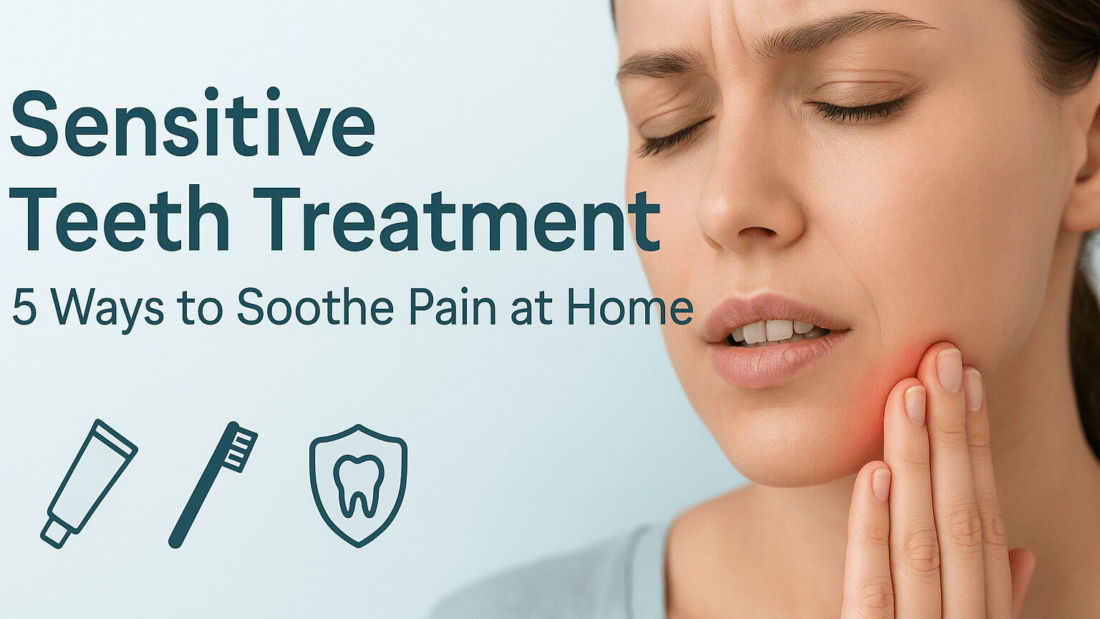
What causes sensitive teeth — and why does it hurt so much?
Think of your tooth like a house. The enamel is the strong, solid roof and walls. If that roof wears thin or the foundation (your gums) recedes, it exposes the inner framework—the dentin. This layer is full of tiny pipes that lead directly to the home’s nerve center. When cold, sugar, or even a breeze hits those exposed pipes, it sends a shock straight to the core. That jolt is your nerve sounding the alarm. Cleveland Clinic+2MouthHealthy+2
Sensitive Teeth are usually a bill coming due for small, repeated stresses. It could be the daily abrasion of scrubbing your teeth too hard, the immense pressure of nighttime grinding, or the chemical erosion from daily sodas and citrus. Sometimes, it’s a single point of failure—a hairline crack in a tooth or an old, leaky filling. And often, it’s gum recession, which literally pulls the protective curtain back from the tooth’s most sensitive area. adanews.ada.org+2Prod Corporate Website+2
Sometimes there’s no obvious cavity — and yet the pain persists. That’s often called “dentin hypersensitivity.” Dentaly.org+1
Bottom line? Sensitive Teeth are your mouth’s alarm system. It’s not a random pain—it’s a direct alert that your enamel shield has worn thin or your gumline has retreated, leaving the vulnerable parts exposed.
The 5 Dentist-Recommended Home Fixes for Sensitive Teeth
1. Use a desensitizing toothpaste (yes, stick with it)
Here’s where every effective plan starts: you have to change your toothpaste. It seems simple, but it’s the cornerstone. A good sensitive teeth formula works by either soothing the tooth’s nerve or by occluding the tiny tubules that lead to it. This creates a daily buffer between your triggers and the pain. My advice? Don’t just buy it—commit to it for a full two weeks, brushing gently twice a day, and you’ll likely notice a significant difference. It’s the most straightforward tooth sensitivity relief you can get from a shelf. Mayo Clinic+2Salvatore Dental+2
In my own case, I switched one month, and after about two weeks, I noticed less sharpness — hot drinks weren’t as painful, and cold felt tolerable again. Consistency is key. The protective barrier doesn’t form overnight. Many dentists say to give it several weeks of regular use before expecting real relief. College of Dental Medicine+1
2. Add fluoride — the enamel’s best friend
Fluoride isn’t just for cavity prevention. It’s one of the most widely recommended ways to strengthen enamel and reduce sensitivity. That’s because fluoride can help re-harden softened enamel and even plug up exposed dentin tubules. Mayo Clinic+2PubMed+2
Getting a professional application from your dentist (varnish or gel) can offer stronger and longer-lasting relief. One recent clinical trial found that fluoride varnish significantly reduced dentin hypersensitivity over a 6-month period — though treatments like diode laser outperformed fluoride alone in some cases. PubMed+1
After fluoride application, use a fluoride toothpaste or mouthwash regularly. It’s like giving your enamel a shield; it helps stop those sensitivity attacks before they start.
3. Be gentle — adopt soft brushing + smart oral habits
Here’s a biggie people underestimate. Brushing aggressively, using a hard-bristled toothbrush, and scrubbing right after acidic drinks, these habits grind down enamel or irritate your gums (Sensitive Teeth), making things worse. Cleveland Clinic+2Teeth+2
Switch to a soft-bristled toothbrush, brush gently in circular motions (don’t scrub), and avoid brushing for at least 30–60 minutes after eating or drinking something acidic (soda, citrus, etc.). Cleveland Clinic+1
Also, floss daily, rinse with plain water after acidic meals, and seriously — lay off smoking or other habits that dry out or irritate gums. Over time, this gentle routine alone can slow enamel and gum damage and protect sensitive teeth from further trouble.
4. Rinse wisely — salt water or gentle rinses to calm things down
If your sensitivity stems from gums, you need a targeted response. Inflammation is the enemy. A strong saltwater solution is a simple, potent countermeasure—it dehydrates swollen tissue and reduces the inflammatory response pressing on the exposed root surface. This isn’t a cavity fix; it’s a tactical reduction of the secondary attack causing your pain. SOLA Dental+2The White Tusk+2
Some people also use mild mouth rinses (preferably alcohol-free, gentle formulas) or even natural rinses — green tea, plain warm water — to support gum health. While evidence isn’t as strong here as with fluoride or desensitizing toothpaste, many dentists consider it a helpful complementary step. Olney Dental Wellness+1
Gingivitis vs Periodontitis: 5 Essential Differences You Need to Know
5. Treat the root cause — consider professional protection if home steps aren’t cutting it
Look, sometimes home care can only do so much. If your enamel is badly worn, gums have receded significantly, or you have a cracked tooth or worn filling, then blocking pain signals at the surface won’t be enough.
When the cause is a specific, exposed patch of dentin or root, a dentist doesn’t just treat it—they build a wall over it. Using materials like composite resin or a concentrated sealing varnish, they can physically cover the vulnerable spot in a single visit. This isn’t a treatment that washes away; it’s a engineered, permanent barrier placed directly between the exposed nerve channels and every trigger that bothers you. Cleveland Clinic+2Mayo Clinic+2
In more recurring cases, solutions such as gum grafts (if receding gums are to blame), or even root canal therapy (in severe sensitivity with nerve involvement) might be necessary. Hopkins Medicine+1
And — if you grind your teeth at night — consider a custom mouthguard to protect enamel from further wear. I’ve seen many clients relieved of chronic sensitivity when bruxism (teeth grinding) was addressed properly. Hopkins Medicine+1
Quick Q&A — What People Also Ask
Why are my teeth suddenly sensitive to cold, even without a cavity?
When a tooth becomes sensitive without a cavity, it’s a structural failure. The protective barriers—enamel and gums—have broken down. This exposes the tooth’s sensitive inner layer (dentin), which is directly connected to the nerve by thousands of microscopic channels. With this pathway open, everyday stimuli like temperature change bypass all defense and travel straight to the nerve at high speed, registering as a sudden, sharp shock. MouthHealthy+2Dentaly.org+2
Can gums cause sensitive teeth?
Yes — if gums recede (due to aggressive brushing, gum disease, or aging), they can expose the softer root surfaces lacking enamel covering. Exposed roots are often far more sensitive than enamel-covered tooth crowns. ida.org.in+2Cleveland Clinic+2
What’s the best way to reduce tooth sensitivity — home care or dental treatment?
It depends. If sensitivity is mild and due to enamel wear, gentle brushing plus desensitizing toothpaste and fluoride often does the trick. But if roots are exposed, or there’s structural damage (cracks, worn fillings), then professional protection (bonding, sealants, gum grafts) is usually more effective for long-term relief.
Why this works — the science behind the relief
The key issue with sensitive teeth is exposed dentin and open dentinal tubules. When enamel or cementum erodes, those tubules become conduits for stimuli (cold, heat, acid) to hit the nerve directly. That’s why even mild cold feels like a sharp jolt. Cleveland Clinic+1
Desensitizing toothpastes usually contain compounds (like potassium nitrate or stannous fluoride) that help block or occlude those tubules — reducing nerve response. SOLA Dental+2College of Dental Medicine+2
Fluoride, likewise, doesn’t just prevent cavities — it helps rebuild weakened enamel, making it harder and more resistant to acid or abrasion. PubMed+2PubMed+2
And if enamel loss is too advanced (or gums have receded), protective treatments help by creating a physical barrier — so the nerve isn’t constantly exposed. That’s why sometimes home care alone isn’t enough, and a bonding or sealant becomes a “game-changer.”
When to See a Dentist — Don’t Ignore These Red Flags
If sensitivity lingers despite good home care for a few weeks… or gets worse… or comes even without cold/hot triggers — get a professional check.
Final Thoughts — Relief is Possible
Sensitivity is a barrier you can break down. The formula is straightforward: protect daily with specialized paste and perfect technique, and seal the deal with professional treatments for any structural issues. This is your toolkit. Use it consistently. The result? You won’t just manage sensitivity—you’ll end it. Your reward is a world where cold, sweet, and hot are just flavors and temperatures, not triggers for pain.
✅ Bonus: Gentle Support for Teeth & Gums
Beyond topical treatments, some strategies target oral health internally. Prodentim probiotic teeth gums contain specific bacterial strains intended to colonize the mouth and support a healthy microbial balance. This focus on the oral microbiome is based on its direct connection to gum inflammation. Using such a supplement is a systemic approach that some adopt to complement their daily brushing and flossing routine.
Leave A Comment