

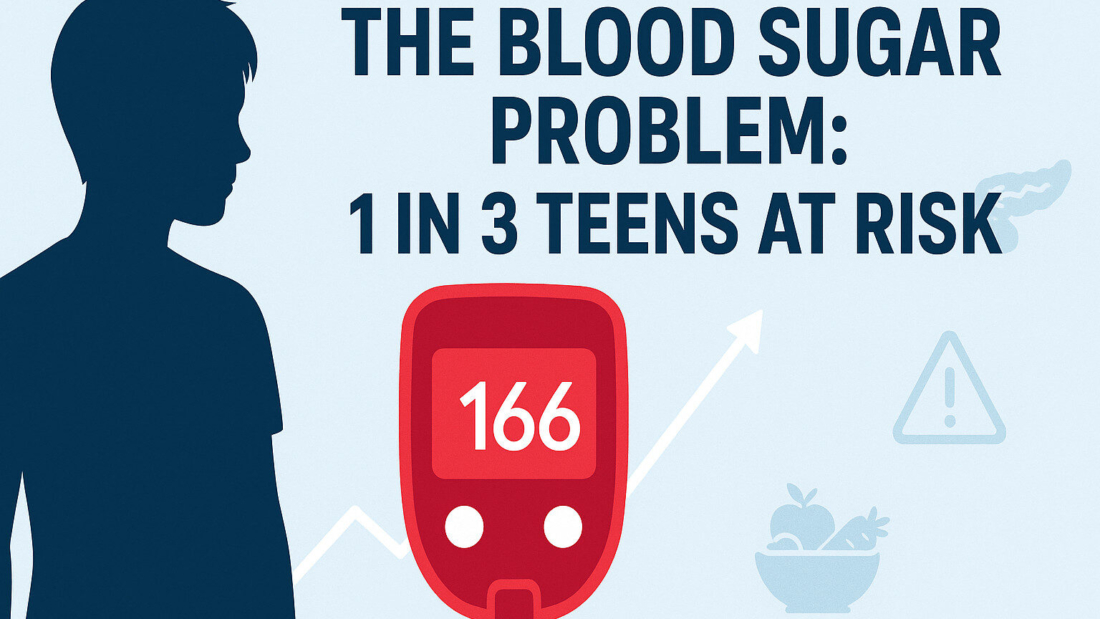
1. Why this surge in prediabetes in youth is a “wake-up call”
We’re now looking at a reality where 1 in 3 American teenagers has prediabetes. Let that number really land. Picture your kid’s soccer team, their homeroom class. One out of every three. This is a five-alarm fire for our kids’ health, and it’s burning right now. STAT+1
That number stopped me in my tracks. Back in 2015–2016, similar data put the rate closer to 28% when using the newer method; older peer-reviewed studies (2005–2016) estimated about 18% among adolescents. JAMA Network+1
So yes — the tide is rising. Why does it matter? Because prediabetes doesn’t always stay “mild.” In many, it progresses to type 2 diabetes, heart problems, or metabolic issues — potentially for life.
But here’s something I tell parents and teens often: it’s not a life sentence. Not yet.
2. What is prediabetes — and what causes it in kids
Let’s get real about what “blood sugar” means.
Let’s strip this down. Your body runs on sugar. Insulin is the hormone that forces that sugar out of your blood and into your muscles and organs. Prediabetes is the stage where your body starts ignoring insulin’s commands. The sugar stops moving. It just sits there, stagnant and corrosive in your veins, because your cells have stopped listening. You’re not diabetic yet, but your body is officially in a state of mutiny.
Several factors push a young person down this risky path:
- Think of it like this. Carrying extra weight, especially around your belly, is like constantly jamming the locks on your body’s cells. Insulin has the key, but it can’t get in. Now, add a couch-potato lifestyle where your muscles—the body’s biggest sugar-burners—are asleep on the job. Genetics might mean you were born with a fewer number of ‘keys,’ but it’s the flood of soda and junk food that overwhelms the entire system. This combo is at the heart of most prediabetes in youth.
- Puberty and hormonal changes. During adolescence, insulin resistance spikes. That’s normal — but in a vulnerable kid, it can lead to prolonged high blood sugar. Experts note puberty may blur the line between temporary insulin resistance and long-term prediabetes. STAT+1
In short, it’s rarely one thing. It’s a mix — and that combo knocks on more doors than we used to think.
3. Prediabetes in youth — often hiding in plain sight
Here’s the kicker. Prediabetes symptoms aren’t dramatic. Usually there’s no classic “diabetes meltdown.”
Teens often don’t notice anything: no extreme fatigue, no frequent urination, no rapid weight loss. But under the hood — insulin resistance quietly builds, blood sugar stays persistently above normal, and the body starts to store fat differently, hormones get disrupted.
In many cases, a simple blood test — fasting glucose or hemoglobin A1c — is the only way to catch it.
That’s why so many teens get skipped. And why this new CDC revelation matters. It reminds parents, pediatricians and schools: we’re not just talking about “adult health problems.” This is happening now.
4. Can prediabetes be reversed in teenagers? Short answer: Yes — often it can.
When I tell families this, eyes widen. “Reversed?” they ask. “At 15–17 years old?”
Yes. I’ve seen it. And scientific evidence supports it — though there are no guarantees.
Let’s talk about the actual battlefield. According to the CDC, preventing diabetes in kids isn’t about advanced medicine—it’s about winning the day-to-day. It’s winning the fight for an extra 30 minutes of play over screen time. It’s winning the fight for a piece of fruit instead of a fruit roll-up. It’s winning the fight for water over soda. This is trench warfare, and every single healthy choice is a victory. CDC
In fact, among kids with prediabetes, studies show that 20% to 50% return to normal blood sugar or glucose tolerance without medication. AAFP+1
5. Real-World Steps to Manage Blood Sugar and Reverse Prediabetes in Teens
Here’s something worth printing out or saving: a kind of “starter pack” for families and teens dealing with high blood sugar or prediabetes.
Picture this: you slowly shift lifestyle patterns — not overnight, but steadily.
Stop fighting symptoms and start fixing the environment. The rules are simple but non-negotiable.
- Food: Drink water. Eat real food that doesn’t come in a wrapper. Sit down at a table to do it.
- Movement: Move your body every day in a way you can tolerate. An hour is great, but 20 minutes is infinitely better than zero.
- Recovery: Protect sleep like your metabolic health depends on it—because it does. That phone charging overnight in their room is the enemy. Find a real way to unwind that doesn’t involve a screen.
This isn’t about perfection. It’s about consistently choosing the better option. That’s how you reverse prediabetes.
Finally: consistency. One good day won’t do much. But small changes, day after day, month after month… that’s where the magic happens. I always tell families: treat it like an experiment. Try. Observe. Tweak. And track with blood tests occasionally.
6. Why this issue matters for public health — and for every parent
Let’s zoom out for a sec.
Forget the statistics for a moment and think about the human reality. When one-third of our youth are prediabetic, we’re talking about millions of future adults who will know more about insulin injections and cardiologists than they should. We’re normalizing a path where our children will inherit chronic illness instead of opportunity, and where our medical infrastructure will be overwhelmed by a crisis that started in their teenage years.
Worse: many won’t even know. Because prediabetes in teens can be quiet.
But here’s the silver lining: unlike a lot of chronic adult conditions, this one is malleable. Change the environment. Shift habits early. Intervene now — and you can steer these kids toward decades of healthier lives.
So if you’re a parent, an educator or a teen — this matters for you. And the best time to act was yesterday. The second-best time? Now.
7. Common questions — answered
Q: Can teens reverse prediabetes?
Ans: Yes. Without a doubt. It’s the most actionable diagnosis they can get.
Q: What are the signs of prediabetes in teens?
Ans: Usually, no obvious signs. While some teens feel extra tired, many have no symptoms at all. A doctor’s blood test provides the only clear answer.
Q: Is prediabetes in kids reversible?
Ans: In most cases, absolutely. But the chances are highest when caught early and addressed consistently.
A Mentor’s Parting Note
The rise in prediabetes among youth isn’t some future cliché; it’s happening right now. And the scary part? It’s subtle. Too subtle for a parent to notice or a teen to admit.
But here’s the thing: if we catch it early. If we act now. If we shift habits when it still matters. We can turn the tide. I’ve seen it. I believe it. And I want you to believe it too.
Start with one small change — swap soda for water, walk after dinner, fix a plate with more vegetables today. Watch what happens. Give it a few weeks. Then another. And don’t underestimate the power in consistency.
Your body — and your future self — will thank you.
💡 Bonus: Natural Support You Can Try
If you want a little extra help managing blood sugar — especially during transitions — consider using Blood Sugar Fix. It’s designed to support healthy glucose levels and improve insulin response — which can be especially helpful while you’re making lifestyle shifts.
Check it out here: Blood Sugar Fix – Pancreas Support
Leave A Comment