Why Early (Early Signs of Diabetes) Detection Matters: The Hidden Danger
Here’s the thing: by the time many people get diagnosed, their bodies have already been under stress for months — maybe years. High blood sugar quietly damages blood vessels, nerves, and even organs over time. oiv.int+2Cleveland Clinic+2
You can either address the early signs or manage the complications. There is no third option. The constant fatigue and unquenchable thirst are your body’s final, polite memos before it starts filing formal complaints in the form of organ damage. I’m not being dramatic. I’m reading you the memo.
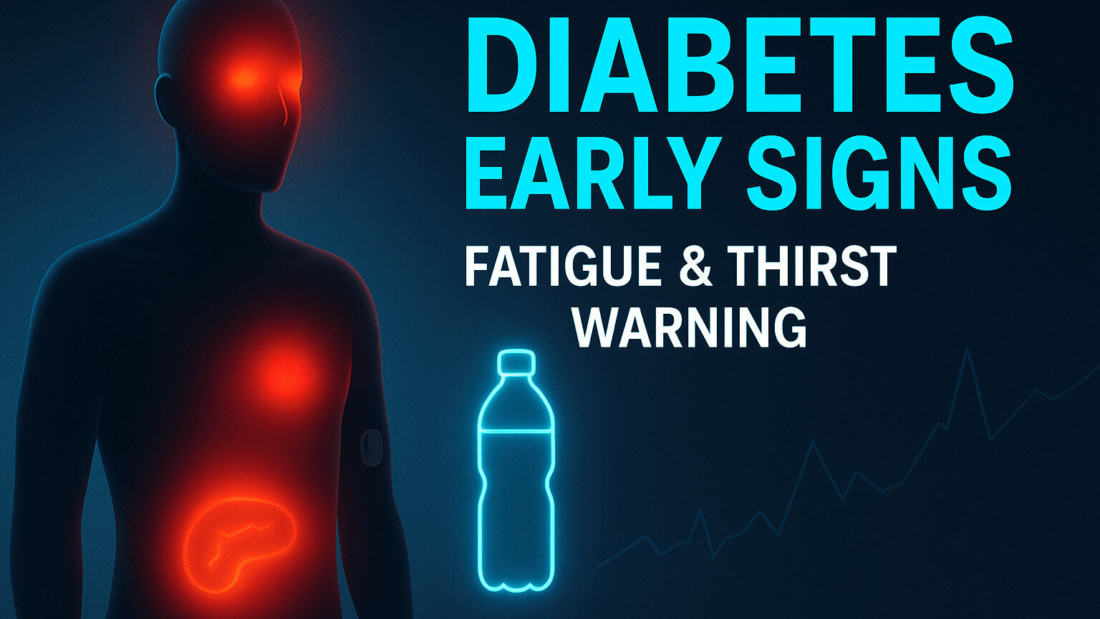
The Big Three: Fatigue, Thirst & Frequent Peeing
Persistent Fatigue — More Than Just “Tiredness” (Early Signs of Diabetes)
Ever felt wiped out even after a good night’s sleep? That’s a key red flag. When your cells can’t use sugar properly — even if there’s plenty in your blood — your body might as well be starved for energy. That messes with your stamina. Mayo Clinic+2Cleveland Clinic+2
Plus, all that frequent urination? It pulls water from your body. Dehydration kicks in. Dehydration makes you feel lethargic, foggy, and weak. It’s like your entire energy system is misfiring.
Excessive Thirst (Polydipsia) — The Nonstop Water Bottle
Here’s how it works: high blood sugar pushes excess glucose into your urine. To flush that out, your kidneys pull extra water out of your tissues — leading to dehydration. Which then makes you super thirsty. You drink more water. Then pee more. Vicious cycle. Mayo Clinic+2Mayo Clinic+2
If you keep drinking — but never feel quenched — that’s one of the classic early signs.
Frequent Urination — More Trips to the Bathroom
You start getting up at night. Take more bathroom breaks than usual. Waking up 2–3 times to pee? That used to be “normal” for me on long nights. But if it’s new, or has increased significantly — pay attention. Mayo Clinic+1
Other Early Symptoms: What Many Miss
Beyond the big three, there are other sneaky signs of rising blood sugar.
You might notice blurry vision — because fluid is being pulled from your eyes, changing how the lens focuses. Mayo Clinic+1 Maybe your weight drops for no reason. Or you get frequent infections — like skin, gum, or urinary infections — because high sugar weakens the immune response. Mayo Clinic+1
Some folks also feel unusually hungry, even after meals. That’s because cells aren’t getting the energy they need — and the body thinks you need more fuel. Cleveland Clinic+1
The bottom line: if you see a few of these together — especially fatigue, thirst, frequent peeing — don’t shrug it off as “stress” or “just busy.”
So… Could It Be Prediabetes? How to Know
A tricky thing about prediabetes (or early type 2) is that symptoms can be very mild — or even nonexistent. www.heart.org+1
That means you could have rising blood sugar for years without a clue. But if you’re asking yourself, “Do I have diabetes?” because of subtle fatigue, thirst, or energy dips — it’s worth paying attention.
Getting a standard glucose test helps — but a newer tool can give you a fuller picture…
Early Signs of Diabetes
What Is a CGM — and When It Makes Sense
Enter Continuous Glucose Monitor (CGM). Imagine: instead of pricking your finger a few times a day and only getting snapshots, you get a live stream of your glucose levels. Every few minutes. Day and night. Harvard Health+1
Here’s how it works: a tiny sensor sits under your skin (often on your arm or belly), reads glucose in the fluid between your cells, and sends that data to a phone or receiver — showing trends, spikes, dips. Harvard Health+1
Why is this useful? Because glucose fluctuations — not just high values at a single moment — often cause the symptoms we talk about (like fatigue or thirst). A CGM lets you see when those spikes happen. After carbs? After stress? At night? It gives you the full story.
CGM for Prediabetes: A Game-Changer or Overkill?
In the past, CGMs were mostly for people with insulin-dependent diabetes (like type 1). But that has been changing. Some studies hint that CGMs could be a powerful tool for people with early or non-insulin type 2 to spot harmful patterns early. Harvard Health+1
That said, it’s not a magic bullet. For many with type 2 diabetes (especially those not using insulin), CGM may not provide dramatic benefits. Harvard Health
If I were you and I suspected “maybe something’s off,” I’d consider a CGM as a diagnostic experiment — worn for a couple weeks to see how meals, sleep, and daily habits impact my glucose. That insight alone can be empowering.
How Type 1 and Type 2 Differ — And What That Means for You
So you know there are two major kinds: Type 1 diabetes and Type 2 diabetes. The way symptoms show up often differs.
Type 1 tends to hit fast — severe thirst, constant peeing, rapid weight loss, sometimes ketones in the urine. Mayo Clinic+1
Type 2, by contrast, creeps up slowly. Fatigue here, a bit of thirst there. Sometimes symptoms are so subtle people chalk them up to “just aging” or “stress.” www.heart.org+1
Because type 2 sneaks in quietly, that’s another reason early detection — and maybe a CGM — matters even more.
When to See a Doctor — Red Flags You Shouldn’t Ignore
If any of the following describe you:
- You’re constantly thirsty — despite normal water intake
- You find yourself peeing multiple times a night
- You’re unusually fatigued, even after a good sleep
- You feel weaker, hungrier, or are losing weight without trying
- Vision gets blurry, or you have persistent infections
…then please make an appointment. Don’t wait. Early testing (fasting glucose, HbA1c) can reveal if blood sugar is creeping up. Early intervention can save a lot of headaches (and health issues) down the road.
My Take as a Mentor: What I’d Do if I Had Early Signs of Diabetes.
If I were you and I started noticing fatigue + thirst + extra bathroom trips, here’s what I’d do — just like I advise my clients:
- First — don’t panic. These Early Signs of Diabetes don’t mean doom. But I’d treat them as alarm bells.
- Second — get checked. A simple blood test (fasting glucose or HbA1c) will tell you if you’re in the danger zone.
- Third — if the test is borderline or “normal but worrying,” I’d try a CGM for 1–2 weeks. Observe patterns. See how my body reacts to meals, sleep, and stress.
- Fourth — adjust lifestyle. Lower refined carbs, stay hydrated, and get regular movement. The early days are often reversible.
Treating early signs like they matter — because they do.
A Simple Action Plan — Do This If You Suspect High Blood Sugar
Stop wondering and start knowing. Your first move is to gather evidence: log your habits and symptoms for a few days. Your second step is to get a fasting glucose or A1c test—this is the baseline truth. If that truth is concerning, your third move is to rent a CGM. It will show you the direct, real-time story of how your food and movement affect your blood sugar. Then, you adjust with purpose: prioritize sleep, balance your plates, and move consistently. Tiny, sustained shifts here rewrite your entire metabolic trajectory.
Promotional Note: Considering Extra Support
Look, I’m naturally skeptical of supplements. But in my practice, when clients are already nailing the basics—diet, exercise, sleep—and still fighting stubborn glucose spikes, I sometimes suggest they look into Blood Sugar Fix. It’s not a magic bullet; it’s a pancreas-support formula that seems to give their metabolism that extra bit of leverage it needs to stabilize.
Product link: https://learnlift.shop/product/blood-sugar-fix-pancreas-support/
(As always: talk to your doctor before starting any supplement.)
Final Word: Listen to Your Body. Early Signs of Diabetes — Don’t Wait
I’ve seen too many people shrug off early signs of diabetes as “just stress” or “just being tired.” And I’ve seen others regret waiting until complications forced them to act.
If you find yourself wondering, “Do I have Early Signs of Diabetes?” — don’t ignore it. Listen to the whispers: fatigue, thirst, bathroom trips, odd hunger. Those are your body sending you a memo.
Get checked. Consider a CGM. Make small changes now. Because health isn’t about reacting — it’s about catching things early, staying ahead, and giving yourself the chance to live well.
You owe yourself that.
Leave A Comment