

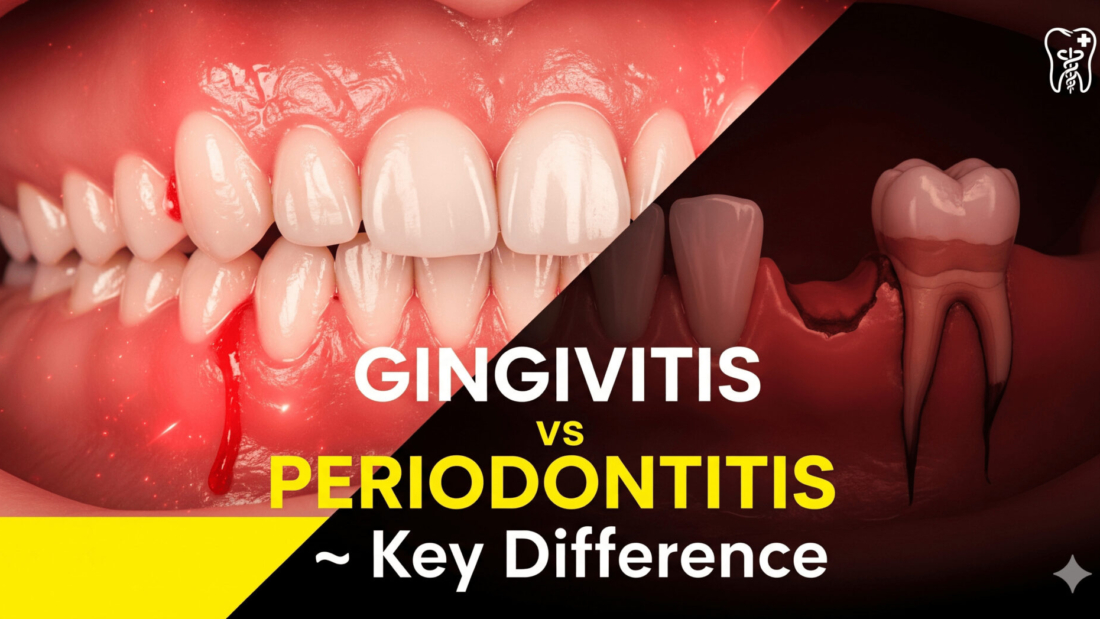
Gingivitis vs Periodontitis: Key Differences That Empower You to Protect Your Oral Health
What Is Gum Disease?
Let’s be real for a second—most of us don’t think about our gums until something starts bleeding. But gum disease is way more common than people realize. Dentists usually divide it into two big categories: gingivitis (the lighter form) and periodontitis (the serious one).
Harvard Health describes gum disease as the body reacting to bacteria that build up along the gumline. At first, it might look like redness or puffiness. Leave it alone long enough, and you’re looking at bone loss, tooth loosening, and, yes, even tooth loss. That’s not something you want to put off.
Gingivitis vs Periodontitis: The Main Difference
Here’s the deal nobody sugarcoats: Gingivitis is your body’s last call to fix things before they break for good. It’s inflammation—plain and simple. Your gums are pissed off. They’re red, they’re puffy, and yeah, they bleed when you brush. But here’s the key: the damage isn’t permanent yet. You can still turn this around. Gingivitis is reversible.
Periodontitis is what happens when you ignore the last call. The bacteria have tunneled deeper. They’re not just irritating your gums anymore—they’re eating away at the bone that holds your teeth in place. That bone loss? It’s permanent. You can’t grow it back. At this point, it’s not about curing; it’s about damage control. Can periodontitis be cured? No. But it can be managed—aggressively—to save what’s left.
That’s the real difference between gingivitis and periodontitis. One’s a warning. The other’s a consequence.
👉 So the takeaway: Gingivitis = early, reversible. Periodontitis = advanced, long-term damage.
Symptoms of Gum Disease You Should Watch
Here’s what to keep an eye on:
- Your gums look puffy and feel sore.
- You’ll see blood when you brush or floss.
- You have bad breath that just won’t quit.
- Gums pulling back (making teeth look longer)
- Loose teeth or a bite that feels “off”
💡 Little tip: don’t ignore even the “mild” signs. Fixing gingivitis is cheap. Letting it slide into periodontitis? That’s when the gum disease treatment cost shoots up.
Is Gingivitis Reversible?
Let’s get straight to it: Yes, you can reverse gingivitis.
This is the silver lining. Gingivitis is your body’s way of giving you a second chance. The formula isn’t a mystery: a professional cleaning from your dentist to scrape away the stubborn gunk, followed by actually brushing twice a day and flossing once a day. No shortcuts. An antibacterial mouthwash can help too, but it’s not a magic fix.
This is your window of opportunity. Gingivitis is the only stage of gum disease you can truly undo. Miss this chance, and the problem moves underground, becoming a permanent tenant. The choice is that simple.
Can Periodontitis Be Cured?
Here’s the not-so-fun news. Periodontitis can’t really be “cured” in the sense of going back to perfect gums. Once bone or tissue is gone, it doesn’t grow back naturally.
Here’s the real deal: you can’t undo the damage, but you can definitely stop it from getting worse. Think of it like this – you’re not going back in time, but you’re putting up a solid defense.
What works? Deep cleanings (called scaling and root planing) and sometimes surgery. These aren’t just fancy procedures – they’re your best weapons to actually stop the disease from advancing.
The goal here isn’t about getting perfect gums back. It’s about keeping what you still have healthy and strong. With the right treatment and consistent care, you can absolutely protect your smile from further damage. This is about management, not miracles – but it works.
Treatment Choices and Costs
Let’s cut to the chase: your wallet feels the difference between gingivitis vs periodontitis more than anything else.
- Catching it early (Gingivitis) is cheap. We’re talking the cost of a standard professional cleaning and maybe a new toothbrush. It’s a simple, affordable gingivitis treatment that solves the problem.
- Letting it progress (Periodontitis) is not. You’re now facing the periodontitis treatment cost, and it’s a different world. Deep cleanings (scaling and root planing) can run you $200–$300 per section of your mouth. Need surgery? Start thinking in thousands, not hundreds.
Yes, geographic location matters—costs in the U.S. or U.K. are typically. But the universal truth is the same everywhere: early care is a small bill; late-stage treatment is a major investment. The most effective way to manage gum disease treatment cost is to never let it get to the expensive stage.
Gum Disease and Heart Disease Connection
Now, here’s where things get a little scary. Research in the last few years suggests gum disease (gingivitis vs periodontitis) may be tied to other health problems, especially heart issues. The idea is that ongoing inflammation from periodontitis doesn’t just stay in your mouth. It can affect your entire body.
Can Gum Disease Raise Your Heart Disease Risk by 28%?—What Science Says
A Harvard Health update in 2023 and studies from the American Heart Association note this possible link. While brushing your teeth isn’t a magic shield against heart attacks, ignoring your gums could raise risks you don’t want.
FAQs
Q1: What’s the difference between gingivitis and periodontitis symptoms?
- Gingivitis: bleeding, red, swollen gums.
- Periodontitis: all of that + gum recession, loose teeth, bad breath.
Q2: How to cure gum disease naturally?
Ans: You can manage early gingivitis at home (brushing, flossing, saltwater rinse), but once it turns into periodontitis, professional care is the only option.
Q3: What is the gum disease treatment cost?
Ans: It varies widely, but treating early is always way cheaper than fixing advanced damage or getting implants.
Q4: Is gingivitis reversible?
Ans: Yes, with consistent hygiene and dental care.
Q5: Can periodontitis be cured?
Ans: Not fully. It can only be controlled, not reversed.
Final Thoughts + ProDentim Recommendation
At the end of the day, the gingivitis vs periodontitis debate isn’t just about definitions. It’s about timing. Catch gum problems early, and you’ll likely save your teeth, your health, and your wallet.
If you’re looking for extra support, there’s also something worth checking out. ProDentim – Advanced Probiotic for Healthy Teeth & Gums is designed to help balance oral bacteria, strengthen gums, and even support fresh breath (gingivitis vs periodontitis). Many users also find it helps digestion, which is a nice bonus.
👉 Take a look here: ProDentim – Advanced Probiotic
Don’t wait until your gums scream for attention. A little care now can save you from a world of trouble later. 🚀
Leave A Comment