


1. What Is High Morning Blood Sugar?
Ever check your blood sugar first thing in the morning and just feel completely confused? You did everything right—you haven’t eaten anything all night—so why is that number so high? That frustrating surprise is what many know as high fasting blood sugar, or more commonly, a morning blood sugar spike. It’s a rotten way to kick off your day, and honestly, it can leave you feeling defeated before you’ve even had your coffee.
But here’s something important: you’re not the only one wondering why my blood sugar is high when I wake up. And the real reasons might surprise you. It’s not always about what you ate for dinner. We’re going to break down five unexpected causes behind this stubborn issue and—most importantly—give you clear, actionable steps on how to fix high morning blood sugar for good.
2. Surprising Cause #1: The Dawn Phenomenon
You know what’s really frustrating? Waking up to a high blood sugar reading when you haven’t eaten since dinner. I’ve been there myself – that moment of confusion when the numbers just don’t make sense.
Turns out, there’s a biological reason for this that affects nearly half of us with diabetes. Here’s the deal: in those early morning hours, your body actually releases a bunch of hormones (cortisol and glucagon are the main players) that tell your liver to pump out glucose for energy. It’s like your body’s natural alarm clock – it’s trying to give you energy to start your day.
For people without diabetes, the pancreas just handles this naturally. But when you’ve got impaired insulin function, your body can’t keep up with this morning hormone surge. That’s why you see those high numbers on your meter – it’s not something you did wrong, it’s just your body’s natural rhythms working against you.
In non-diabetics, the pancreas ramps up insulin to compensate, so it usually doesn’t spike. But for those with impaired regulation? Cue the confusion. American Diabetes AssociationNCBIWikipedia
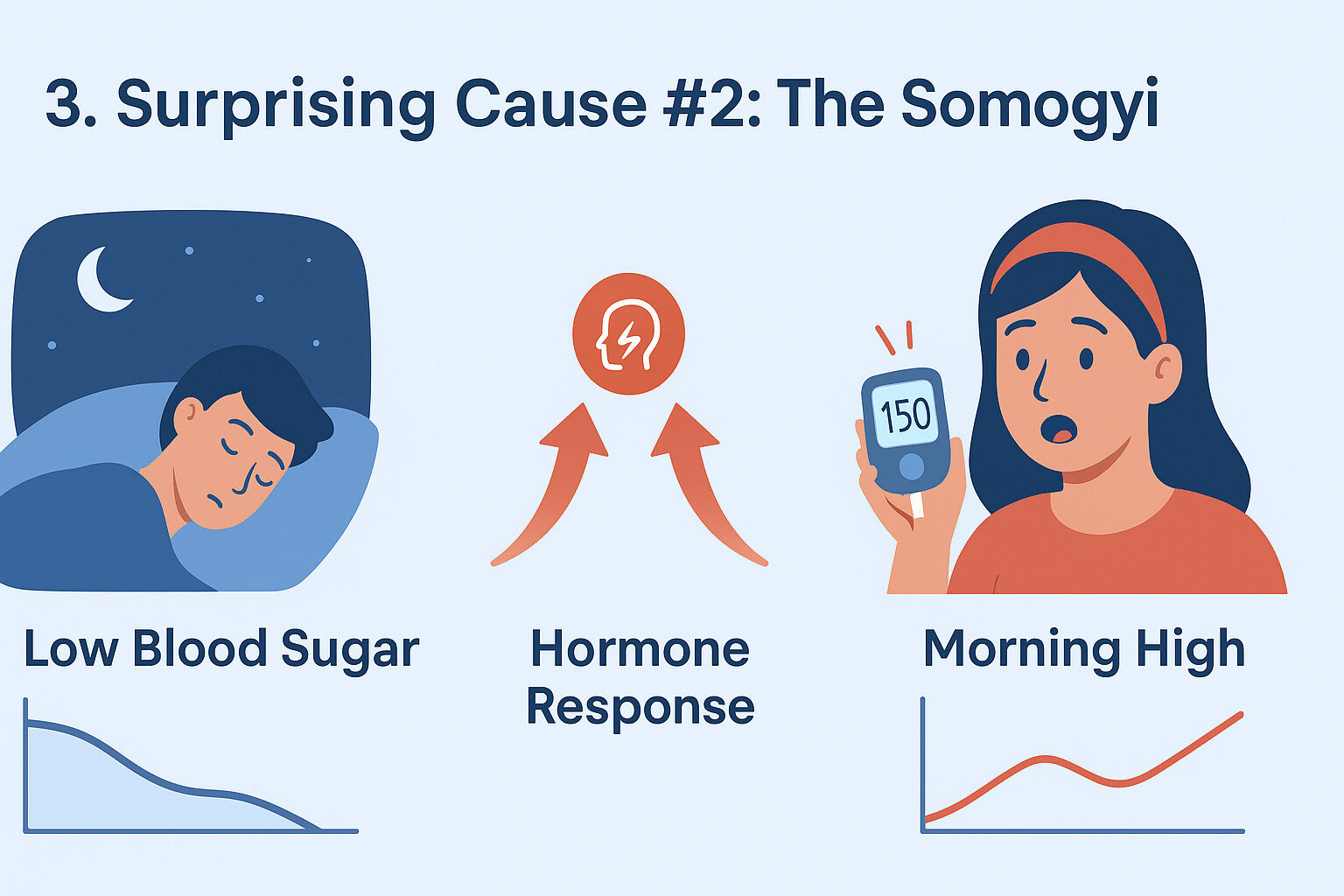
3. Surprising Cause #2: The Somogyi Effect
Ever heard of “rebound high”? The Somogyi effect happens when overnight hypoglycemia (too much insulin or a long stretch without food) triggers stress hormones that overcorrect and shoot your sugar high by morning.
It’s controversial—some studies suggest it’s less common than the dawn effect—but still worth checking out. Medical News Today+1WebMDVerywell Health
4. Surprising Cause #3: Declining Insulin Levels & Waning Medication
If you’re on insulin therapy, those long-acting types might wear off around dawn. Or perhaps your evening meds are no longer hitting the mark by morning. This waning coverage can leave your body without enough “brakes” to prevent a glucose surge. American Diabetes AssociationNCBI
5. Surprising Cause #4: Insulin Resistance & Lifestyle Stressors
Let’s get real—insulin resistance can sneak up on you. It’s often tied to poor sleep, stress, or even medical conditions like PCOS or fatty liver. If your cells resist insulin’s signal, glucose lingers in the blood—not cool. Harvard HealthWikipedia
Tip: Poor sleep alone elevates insulin resistance significantly—studies show about 23% higher morning glucose with sleep loss.Verywell HealthEatingWell
6. Surprising Cause #5: Non-Diabetic Factors You Didn’t Expect.
Here’s something that might surprise you: sometimes that frustrating morning spike has nothing to do with what you ate or your diabetes management. I remember feeling so frustrated when my numbers stayed high even though I was doing everything by the book.
It turns out there are several hidden factors that can throw off your readings:
- Inflammation or illness: When your body’s fighting something – even a minor cold – it can send your sugar levels climbing
- Medications: Common prescriptions like steroids or even some antidepressants can have sugar-raising side effects that doctors don’t always mention
- Hormonal imbalances: Sometimes it’s not about insulin at all – your thyroid or other hormones might be the real culprit
If you’ve tried all the standard solutions and still see high numbers, please don’t blame yourself. This might be your body’s way of telling you something needs deeper investigation. When I finally discussed these possibilities with my doctor, it completely changed my approach. Sometimes the answer isn’t in your food diary – it’s in understanding your body’s unique chemistry.
These rarer causes are essential to rule out when typical fixes don’t work. Wikipedia
How to Repair Pancreas Function Naturally: A 7-Step Healing Protocol
7. How to Fix High Morning Blood Sugar—Fast
Here’s your no-fluff playbook. Try these savvy moves—with your doc first, of course:
| Strategy | How It Helps |
| Track overnight levels (via CGM or finger-sticks at 2–3 a.m.) | Helps distinguish dawn phenomenon vs Somogyi effectMayo ClinicVerywell Health |
| Shift your medication timing or dosage | Adjust basals/metformin to cover that early gapMayo ClinicAgaMatrix |
| Limit carbs before bed | Reduces blood sugar load during sleepVerywell Health |
| Add light evening exercise | Boosts insulin sensitivity and smooths glucose regulationVerywell Health |
| Ensure quality sleep | Deep sleep = better blood sugar controlVerywell Health |
| Avoid overshooting insulin | Prevent overnight lows that trigger Somogyi aftermathMedical News TodayVerywell Health |
| Address underlying issues (stress, infection, meds) | Sometimes the root is non-metabolic—get it checked |
8. Frequently Asked Questions
Why is my blood sugar high when I wake up?
It could be due to normal hormonal surges (dawn phenomenon), overnight lows triggering rebound highs (Somogyi effect), waning medication, or insulin resistance. Or, in rare cases, stress or meds. CGM or night-time checks help pinpoint the cause.
What causes high blood sugar in the morning in non-diabetics?
Even without diabetes, anyone may experience the dawn surge if insulin response is delayed. Usually, the body compensates well, but poor sleep, stress, or medications can impair that, causing transient spikes. ZoeMedical News TodayHarvard Health
How do I fix high morning blood sugar?
Tweak your nighttime carbs and activity, adjust meds under guidance, improve sleep, and monitor overnight. It’s not rocket science, but it’s often a total game-changer.
The dawn phenomenon vs the Somogyi effect—what’s the difference?
- Dawn phenomenon: natural hormone-driven glucose rise without prior hypoglycemia.
- Somogyi effect: rebound high following overnight low. Checking a 2–3 a.m. glucose level is the best detective move. Medical News TodayVerywell HealthNCBIWikipedia
Why is my blood sugar high at 4 a.m.?
Classic dawn effect timing—body prepping to wake you up. If it’s coupled with low midnight readings, though, it might indicate Somogyi rebound. Monitoring solves the mystery.
9. Affiliate Promotion: Blood Sugar Support.
You know that frustrating gap between doing everything right and still seeing those stubborn high morning numbers? I hit that wall too—until my doctor explained something that changed everything.
She said sometimes our bodies need specific nutritional support to handle blood sugar properly, especially with modern diets missing key nutrients. That’s when she suggested Blood Sugar Support—not as a magic pill, but as targeted nutritional backup.
Here’s what made the difference for me:
- It contains berberine and cinnamon extract, which studies show help your body use insulin more effectively
- It works gradually alongside your existing diet and exercise routine
- I noticed my numbers became more consistent about 3 weeks into using it.
The best part? It finally made all my healthy habits feel like they were actually paying off. Check it out here—and let me know how it goes!
Leave A Comment