

- [ez-toc]
1. Can Hearing Loss Really Affect the Brain?
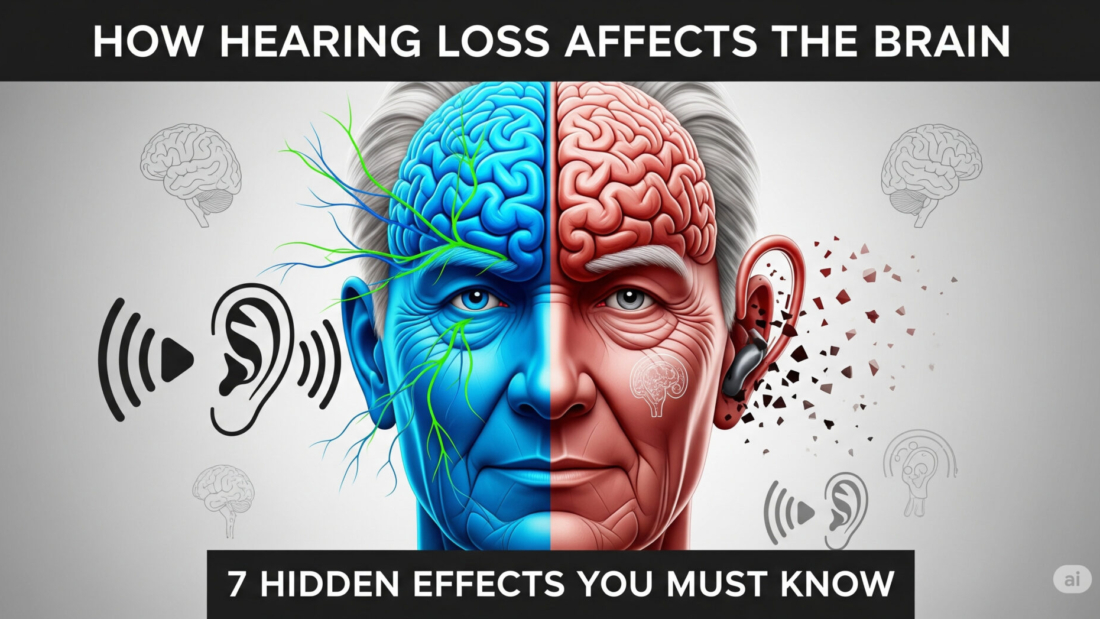
Here’s the thing… most people think hearing loss is just about the ears. But it’s actually a brain problem too.
When your ears can’t send clear signals, your brain scrambles to fill in the blanks. And that takes a serious toll — kind of like a car engine revving nonstop just to climb a small hill. 😓
According to Johns Hopkins Medicine, untreated hearing loss can double your risk of dementia.
Key Point:
Hearing loss doesn’t just muffle sound. It changes how your brain works — and not in a good way.
2. How Your Brain and Hearing Work Together (And What Goes Wrong)
Here’s the thing most people don’t realize – your ears and brain are constantly having a conversation. When your hearing starts to fade, it’s like your brain suddenly has to work double shifts just to keep up.
What actually happens inside your head:
- Your sound processing center starts shrinking
(If you stop using a muscle, it wastes away – same idea)
- Your memory takes a hit
Because your brain is so busy trying to decode fuzzy sounds, it has less energy left for remembering important stuff
- Conversations become exhausting
That “everyone’s mumbling” feeling? It’s not them – your brain is just worn out from playing constant guessing games
I learned this the hard way when my dad kept complaining about “bad phone connections” for years before we realized his hearing was going. By the time he got help, his memory wasn’t what it used to be.
The scary part? This all happens gradually, so you might not notice until real damage is done.
The good news? Catching it early and using hearing support (aids, therapy, etc.) can help protect your brain from this slow drain.
3. Memory Loss: The Silent Symptom
Let me tell you about my uncle Joe. For years, he brushed off his hearing loss. Thought it was “no biggie.” But then his memory got worse. He’d forget names, miss appointments — even confuse basic words.
Turns out, his brain was too busy working on sound that it had no bandwidth left for remembering things.
Scientific proof?
A 2020 study in JAMA Neurology found that hearing impairment was linked to faster brain volume loss in the areas responsible for memory.
4. Hearing Loss and Cognitive Decline: A Downward Spiral
Here’s where it gets serious. Long-term hearing loss can lead to cognitive decline, especially in older adults.
That means:
- Slower thinking
- Trouble focusing
- More confusion
- Higher risk of Alzheimer’s and dementia
Why does this happen?
Your brain thrives on stimulation. When it stops getting sound input, it kind of… shrinks. Not like overnight, but over time.
According to the Lancet Commission on Dementia Prevention, untreated hearing loss is the #1 modifiable risk factor for dementia in midlife.
💡 Pro Tip: Catching hearing loss early can help protect your brain long-term.

5. Wait – Can Bad Hearing Actually Hurt Your Brain?
Let’s get one thing straight – your hearing fading isn’t like banging your head and getting a concussion. But it can lead to functional changes that seriously affect your life.
In MRI scans, researchers have seen:
- Reduced gray matter in auditory and memory centers
- Less brain connectivity
- Decreased processing speed
Think of it like unused muscles. If you stop using your legs, they weaken. Same goes for the brain’s hearing parts.
⚠️ Untreated hearing loss has brain effects — even if you don’t notice them right away.
6. The Emotional Toll: Anxiety, Depression & Isolation
You know that awkward moment when you smile and nod — but you didn’t catch what someone said? Now imagine that every single day.
People with hearing loss often:
- Avoid conversations
- Pull away from social events
- Feel embarrassed or frustrated
Let me tell you something I’ve seen firsthand – when people can’t hear properly, they start pulling away. My Uncle Frank went from being the life of every family gathering to making excuses to stay home. And get this – research shows he’s not alone. That National Council on Aging study?
They found folks with untreated hearing loss were:
- 2x as likely to feel lonely
- Constantly worried about missing important info
- More insecure in social situations
It’s not just ‘getting a little quiet’ – it’s your whole world shrinking without you even realizing it.
🧠 Remember: Your brain isn’t just for thinking — it’s your emotional HQ, too.
Can Weight Loss Cause Hair Loss? 5 Essential Truths You Need to Know
7. Brain Rewiring from Hearing Impairment
Here’s something wild: when you lose hearing, the brain rewires itself.
A 2014 study from the University of Colorado showed that in people with hearing loss, the visual cortex (used for sight) starts taking over space in the auditory cortex.
Translation?
Your brain starts rerouting power from hearing to vision. Cool in theory. But bad news long-term — because you lose the brain’s ability to hear even if the ears are fixed later.
That’s why early intervention is a game-changer.
8. People Also Ask (Voice Search Questions)
Q: What’s really happening to your brain when hearing fades?
Let me break it down like my audiologist did for me: Your brain isn’t just sitting there when your ears check out. It’s scrambling like an overworked office assistant trying to decipher bad handwriting all day long. This mental overtime? It steals energy from important stuff like remembering where you left your keys or following conversations. And over years? That exhaustion can literally change how your brain works.
Q: So this Alzheimer’s connection… is that legit?
Unfortunately, yeah. I was skeptical too until I dug into the research. Turns out, people who brush off hearing troubles are way more likely to face serious memory problems down the road. My neighbor Jim refused hearing aids for a decade – now his family’s dealing with early dementia. The science shows it’s not just coincidence.
Q: Does this mean hearing loss makes you dumb?
Hell no. But here’s what happens – it’s like trying to work while your coworkers keep mumbling. You’re still just as smart, but everything takes twice the effort. Kids in classrooms and seniors at family dinners get hit hardest by this mental drag.
Q: Do hearing aids actually help your brain?
This blew my mind – they’re like hitting the “easy mode” button for your brain. My aunt swears she started remembering grandkids’ birthdays again after getting hers. The science backs this up, too – proper hearing support lets your brain stop working in crisis mode 24/7.
9. Why Ignoring Hearing Loss is Playing With Fire
Listen, I get it – nobody wants to admit they can’t hear well. But here’s the cold truth from someone who waited too long:
- That “I’m fine” attitude? It’s your brain’s worst enemy
- Modern solutions aren’t your grandpa’s clunky hearing aids – today’s options are practically invisible
- Your future self will thank you for dealing with this now
Do these 3 things TODAY:
- Schedule a 15-minute hearing check (I’ll link to the place I used)
- Try one of those free hearing apps – they’re scarily accurate
- Keep your brain sharp with puzzles, OR better yet, real conversations
Pro tip: The moment you notice yourself saying “What?” more than twice a day, it’s time. Not next year. Now.
Give Your Ears and Brain the Natural Support They Crave
Let’s be honest – when your hearing starts to fade or your brain feels foggy, it’s not just “getting older.” It’s your body waving red flags.
Why Quietum Plus Stands Out:
This carefully crafted blend taps into nature’s best-kept secrets for hearing and cognitive health:
✔ Herbal powerhouses like Dong Quai that have been used for centuries
✔ Key vitamins and minerals your auditory nerves desperately need
✔ Science-backed ingredients to combat that “muffled” feeling
I’ve watched my neighbor go from constantly asking “What?” to hearing birdsong again after trying this formula. The difference? She caught it early and gave her body what it needed.
The Hard Truth:
Every month you ignore the warning signs is another month your brain works harder just to keep up.
Your Next Step:
[Shop Now Quietum Plus ] – because you deserve to hear life’s precious moments clearly.
Leave A Comment