1. Why This Question Matters.
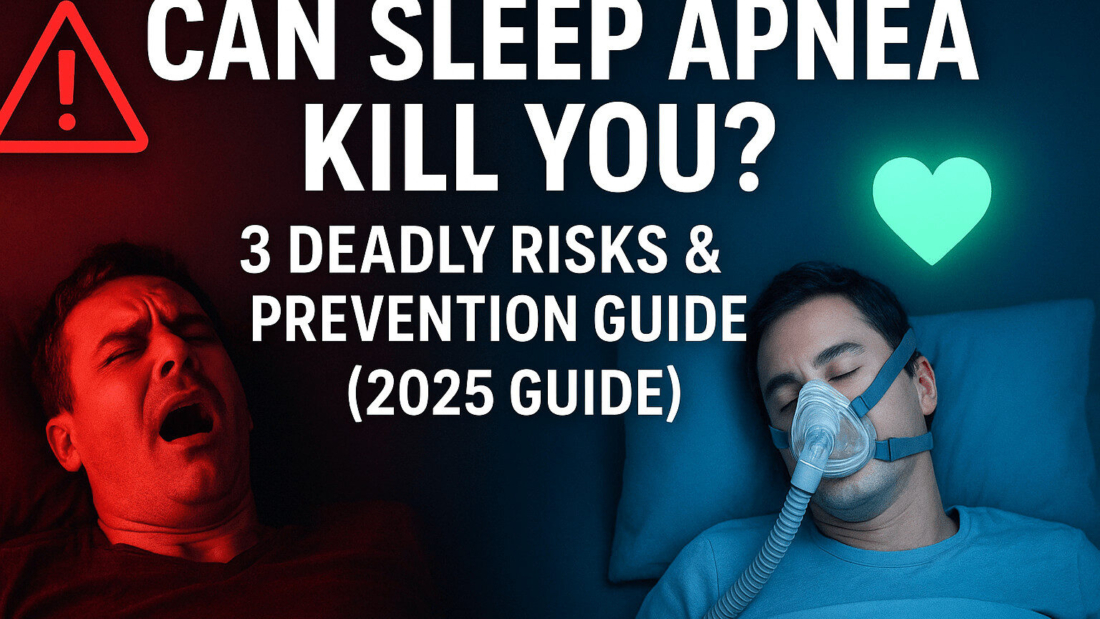
When someone asks, “Can sleep apnea kill you?”, it may sound dramatic. But it’s not a stretch. Sleep apnea, particularly when untreated, quietly strains your body night after night, and over the years, that damage can become life-threatening.
This article isn’t here to scare you — it’s here to inform, empower, and help you act before it’s too late. We’ll look at sleep apnea dangers, real evidence of risk, and how to prevent complications you rarely hear about.
2. What Is Sleep Apnea & Who’s at Risk?
Let’s cut through the medical jargon. Sleep apnea isn’t just snoring – it’s when your breathing keeps hitting the pause button at night. Here’s what actually happens:
Obstructive (OSA): Your throat muscles relax so much they collapse like a wet paper straw – blocking air completely. This is the classic version most people get.
Central: Your brain’s wiring glitches and forgets to tell your lungs to breathe. No blockage – just faulty signals.
Mixed: The unlucky combination of both problems happening together.
We measure severity by how many times your breathing stops each hour (AHI score):
- Under 5: Normal breathing
- 5-15: Mild (like occasional speed bumps)
- 15-30: Moderate (regular roadblocks)
- 30+: Severe (breathing highway traffic jam) Wikipedia:
Who’s at risk?
People carrying extra weight, especially those with thick necks.
- Anyone over 40 (risk climbs with age).
- Men are 2-3x more vulnerable (until women hit menopause).
- Those with built-in narrow airways – large tonsils, recessed jaw.
- People are already battling high blood pressure or diabetes.
- If your family members have it, your odds increase.
The common thread? Anything that narrows your airway or affects breathing control puts you in the danger zone.
Can Losing Weight Cure Sleep Apnea? 7 Essential Secrets to Breathe Easy
3. Risk #1: Cardiovascular Catastrophes
This is where sleep apnea’s dark side shows up clearly.
When your airway repeatedly closes during sleep, your blood oxygen dips. Your heart and blood vessels react violently — surging pressure, stress hormones, inflammation. Over years, that equals cardiovascular risk.
- People with untreated OSA have about 30% higher risk of heart attack or death than those without it. Wikipedia
- In the Wisconsin Sleep Cohort, severe sleep apnea (when untreated) was associated with a 3× higher risk of death compared to no apnea. AASM
- Another meta-analysis showed a 1.74× higher risk of sudden death for those with OSA. bmjopenrespres.bmj.com
Bottom line: The heart doesn’t forgive repeated nighttime stress. Sleep apnea dangers include heart attack, arrhythmias, hypertension, and congestive heart failure.
4. Risk #2: Stroke, Brain Injury & Vascular Damage
The brain is vulnerable in another way.
Frequent oxygen interruptions (desaturation) and surging blood pressure damage the blood vessels in your brain. Over time, this contributes to:
- Stroke risk
- Microvascular injury (tiny vessel damage)
- Cognitive decline, memory loss
- Higher risk of dementia in some patients
Studies and expert reviews (e.g., Johns Hopkins) link sleep apnea complications to stroke and vascular disease independent of traditional risk factors like hypertension. Johns Hopkins Medicine
Yes — sleep apnea can have neurological ripples beyond just sleepiness.
5. Risk #3: Metabolic & Mortality Toll
The third risk is more insidious but equally real: how apnea interacts with your metabolism and lifespan.
- Untreated sleep apnea shortens life expectancy. Some sources say by several years. SLEEP BETTER COLUMBUS+1
- If you have OSA and sleep less than 7 hours, your mortality risk increases significantly. In one study among apnea patients, shorter sleep was tied to higher all-cause death rates, regardless of AHI. JAMA Network
- A 2023 study on mortality in obstructive sleep apnea showed that nighttime positive airway pressure (PAP) use improves survival. ScienceDirect
The takeaway? Untreated OSA doesn’t just make life harder; it may make life shorter.
Is Poor Sleep Making You Gain Weight? The Science Behind the Sleep-Fat Connection
6. How Serious Is Sleep Apnea Untreated?
Let’s break that down.
Life Expectancy & Death Statistics
- Some authorities claim that untreated apnea could decrease life expectancy by 10 years on average. canyonlakefamilyandcosmeticdentistry.com
- In severe apnea, mortality differences become more pronounced. PMC+1
Long-Term Effects if Untreated
- High blood pressure that’s hard to control
- Heart disease progression
- Stroke & cognitive decline
- Metabolic disorders (insulin resistance, type 2 diabetes)
- Therapeutic resistance (you need higher drug doses)
Yes, it’s serious. But also manageable — if caught early.
7. How to Prevent Sleep Apnea Complications.
Let’s get straight to what actually works. I’ve seen patients transform their sleep apnea outlook by focusing on these key areas:
Lifestyle Changes That Deliver Results
- Drop even 10% of your body weight – it’s like taking pressure off a kinked hose
- Skip nightcaps – alcohol relaxes your throat muscles like a loose rubber band
- Become a side sleeper – it keeps your airway straighter
- Clear your nose – stuffy sinuses force mouth breathing that worsens apnea
Sleep Habits That Matter
- Hit 7+ hours nightly – short sleep makes apnea worse. JAMA Network
- Stick to a schedule – your body loves rhythm
- Cool, dark, quiet – optimize your cave
- Humidify – CPAP users especially need this
When to Sound the Alarm
- Snoring that echoes through walls
- Waking up gasping
- Daytime sleepiness that affects work/driving
- Morning headaches that won’t quit. Wikipedia
The truth is, most people wait 7 years too long to get help. If this sounds familiar, talk to your doctor now – not when complications set in.
8. Treatment Options to Reduce Risks
Treatment isn’t optional — it’s your best defense.
CPAP / PAP Therapy
Continuous Positive Airway Pressure (CPAP) is the gold standard for moderate-to-severe OSA. It keeps your airway open while you sleep.
- Studies show CPAP use reduces mortality risk in OSA patients. ScienceDirect+1
- Adherence is key. Wearing it nightly matters more than perfect settings.
Oral Appliances & Mandibular Devices
For mild-moderate cases, dental devices that bring the jaw forward can reduce airway collapse.
Surgical Options
In some anatomic cases, surgery (UPPP, tonsil removal, nasal reconstruction) may help.
Hybrid / Adjunct Strategies
- Use positional therapy (vibrating belts that encourage side sleeping)
- Combine weight loss, respiratory muscle training, nasal dilation devices
- Use bi-level PAP if your condition involves both airway collapse and central apnea components
If you treat effectively, many of the sleep apnea risks drop significantly.
9. People Also Ask / FAQ
Q1: Can obstructive sleep apnea kill you?
Yes. Severe untreated OSA doubles the risk of sudden death and generally increases all-cause mortality. bmjopenrespres.bmj.com+1
Q2: How serious is untreated sleep apnea?
Very serious. It leads to cardiovascular, neurological, and metabolic damage — and shortens life expectancy.
Q3: What happens if sleep apnea is not treated?
Think of it this way: every time you stop breathing at night, your body panics. This happens dozens, sometimes hundreds of times each night. Over months and years, this constant panic mode takes a serious toll:
- Your heart takes the hardest hit – the stress can lead to high blood pressure, irregular rhythms, and even heart failure
- Your brain suffers from oxygen deprivation, leading to memory issues and difficulty concentrating
- Your metabolism gets disrupted – making weight loss difficult and increasing diabetes risk
- Your energy systems crash – leaving you exhausted, no matter how long you sleep
The scary part? Most of this damage happens silently before you notice any symptoms.
Q4: What are the warning signs of severe sleep apnea?
Your body gives you clear signals when you need attention for sleep apnea. The most important signs are:
- You snore loudly enough to be heard in another room
- You sometimes wake up gasping for air
- You feel exhausted even after a full night’s sleep
- You need naps during the day to function
- You wake up with headaches or a dry mouth
- Your partner notices you stop breathing during sleep
If you’re experiencing several of these symptoms, it’s time to talk to your doctor.
Q5: What are the best treatment options to reduce risks?
CPAP, oral appliances, weight loss, positional therapy, and surgery — combined with lifestyle changes.
10. Affiliate Section: Sumatra Slim Belly Tonic
Getting your sleep apnea treated with a CPAP or other medical device is the most important step. But let’s be real—many people still struggle with the weight gain that makes sleep apnea worse. That’s where looking at your overall metabolic health comes in.
Weight management is crucial for improving sleep apnea symptoms. Sumatra Slim Belly Tonic is one option that aims to support metabolism and healthy weight loss. Using it together with your CPAP and other healthy habits may help reduce the weight that puts pressure on your throat during sleep.
👉 Try Sumatra Slim Belly Tonic here
Sumatra Slim Belly Tonic – Natural Sleep Aid for Healthy Weight Loss
Note: Always consult your physician before starting any supplement.
11. Final Thoughts & Call to Action
So, can sleep apnea kill you? Sadly, the truth is yes. If it goes untreated for too long, it can raise the chances of sudden death, heart disease, stroke, and even cut years off your life. The good part is — it doesn’t have to reach that point.
Truth be told, the real game-changer here is getting help sooner rather than later and actually sticking with your treatment. If you’re consistently snoring up a storm, waking up gasping, dragging through your days feeling totally drained, or if your blood pressure just won’t budge, that’s not something to ignore. Take the step to book a sleep study, understand what’s truly happening, and then commit to your treatment plan. When you combine that with all those good prevention habits, you’re truly investing in your long-term health and a much better future.
💬 I’m curious — what’s been the biggest reason holding you back from getting a sleep study or trying CPAP? Is it the cost, the hassle, fear, or something else? Share below — sometimes talking it out makes finding a solution a lot easier.
Leave A Comment